
Why Do Windows Get Dirty So Fast in Santa Cruz?
If your windows look hazy a few weeks after they were cleaned, you’re not imagining it. The marine layer that rolls in off Monterey Bay leaves a film of salt and minerals on glass. Here’s how it forms, what it does to your windows and solar panels, and what keeps them clear longer.
Call or text a few photos. Flat quote, usually the same day.
- Marine layer basics
- Why glass gets hazy
- What helps
- What doesn’t
The Marine Layer Leaves a Film Every Time It Burns Off
Santa Cruz windows get dirty fast because coastal fog deposits salt and mineral particles on glass, then evaporates and leaves them behind. Repeat that night after night and you get a dull haze that grabs dust, pollen and smoke. Add sprinkler spray and tree sap, and coastal glass gets dirty far faster than glass inland.
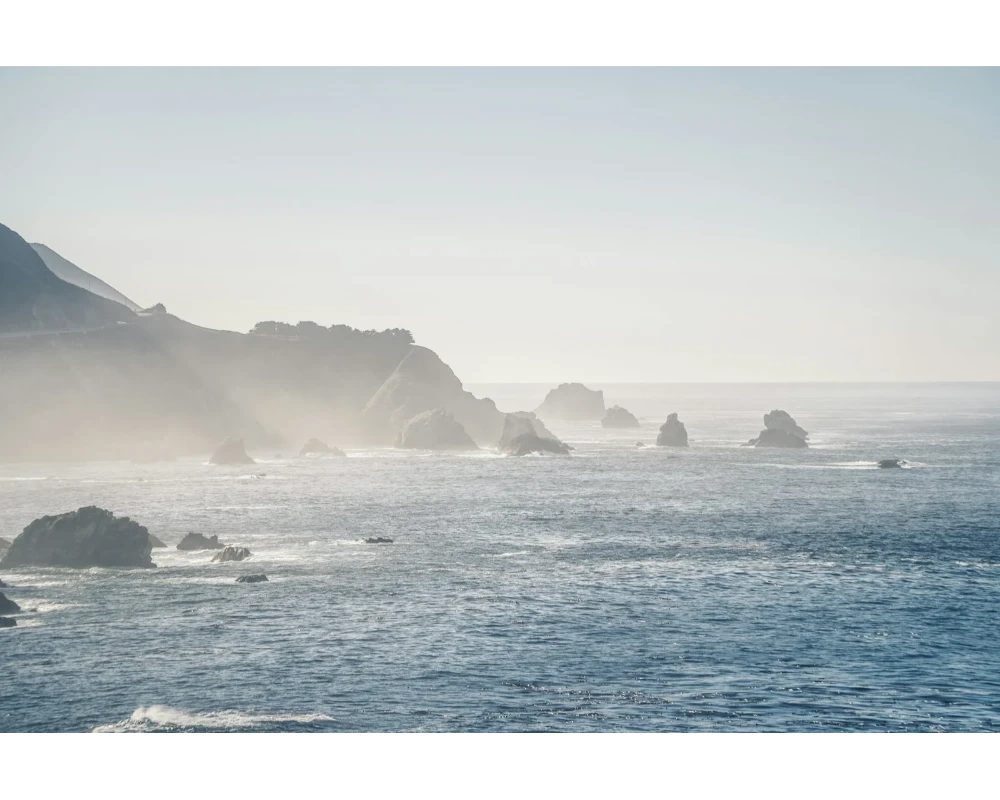 Marine layer fog over the California coast
What Is the Marine Layer?
A plain-language version of what forecasters mean by it.
Cold water offshore
The ocean off the West Coast is cold, much colder than the Atlantic at the same latitude. Air sitting over that cold water cools and becomes dense and moist.
A lid of warm air
When warmer air sits on top of that cool layer, temperature rises with height instead of falling. Forecasters call that an inversion. It caps the cool, moist air near the surface, and fog and low clouds form inside it.
Strongest in late spring and early summer
The inversion is most common when the air above is warm and the water is cold, which is why Californians call the season May Gray and June Gloom.
Why does the fog burn off by afternoon, then come back? Changes in pressure aloft lift and break up the layer during the day, and it often reforms overnight. For your windows, that means a wet-then-dry cycle almost every day of the foggy season.
What the Marine Layer Does to Windows
Fog isn’t just water. Here’s what stays behind when it dries.
Salt and minerals stay behind
Fog droplets form around tiny airborne particles, and near the coast many of those are sea salt. When the droplet evaporates on your glass, the salt doesn’t.
Salt holds moisture
Salt pulls water out of the air, so the film stays slightly tacky. Dust, pollen and smoke stick to it, and the haze builds faster each week.
Spots turn into stains
Left long enough, mineral deposits bond to the glass and become hard water stains that a normal wash won’t move.
Hard water stain removalMarine layer film vs. regular dirt
| Marine layer film | Regular dirt and dust | |
|---|---|---|
| What it looks like | Even, milky haze across the whole pane, worse on the ocean side | Specks, streaks and drip marks |
| Where it’s worst | West- and ocean-facing glass, skylights, solar panels | Ground-floor glass near walkways and roads |
| Does rain wash it off? | No, rain spreads it and adds its own spots | Partly |
| Does a hose rinse help? | No, tap water adds minerals as it dries | Loosens it, leaves spots |
| What removes it | Pure water and a brush, or soap and a squeegee | Soap and a squeegee |
The Same Film Coats Solar Panels and Skylights
Anything that faces up or faces the ocean gets the heaviest dose.
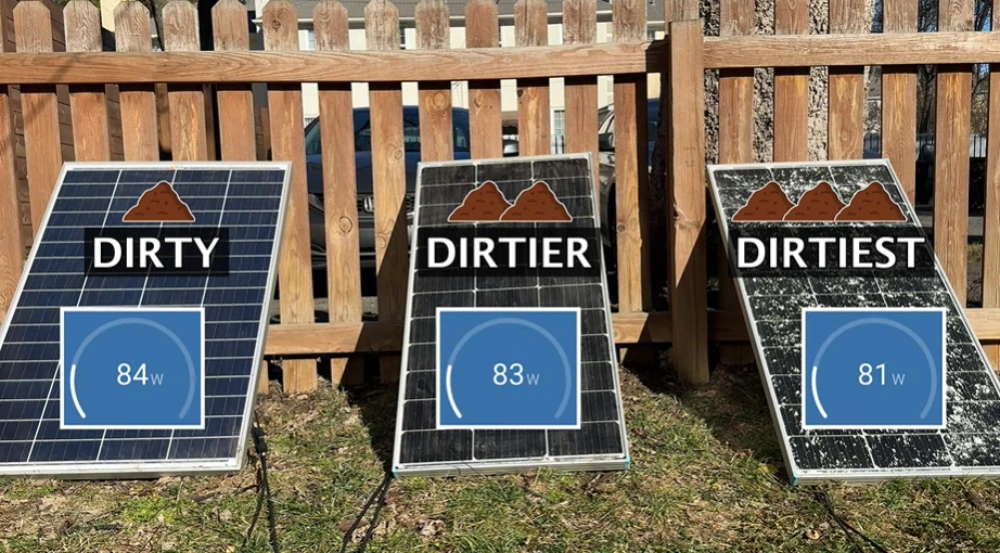 Dirty solar panels output comparison
Solar panels
You can’t see the film from the ground, but it cuts the light reaching the cells, and rain moves it to the bottom edge instead of washing it off.
Solar panel cleaningSkylights
They face straight up, so fog settles on them every night and nothing rinses them clean.
Skylight cleaningScreens
Window screens trap salt film in the mesh, and it transfers back onto the glass when it’s damp. See how to protect windows from salt air.
What’s included in our window cleaningHow to Keep Windows Clear Longer on the Coast
You can’t stop the fog. You can stop it from turning into permanent stains.
What helps
- Clean on a schedule. Quarterly on the oceanfront, every 4 to 6 months within about a mile of the water, twice a year inland.
- Time it with the seasons. Early October before the storms, late March after them, and May before June Gloom settles in.
- Use pure water outside. Deionized water dries without spots, so it doesn’t add minerals of its own.
- Fix sprinklers that hit the glass. Salt film plus sprinkler spray is the fastest route to hard water stains.
- Wash the screens too. A clean pane behind a salty screen gets hazy again faster.
What doesn’t help
- Hosing windows off and letting them air dry
- Waiting for rain to clean them
- Glass cleaner in direct sun, which flashes off and streaks
- Waiting years between cleanings, which lets deposits etch
Santa Cruz Fog and Rain, Month by Month
Rain and fog both affect your windows, but in different seasons.
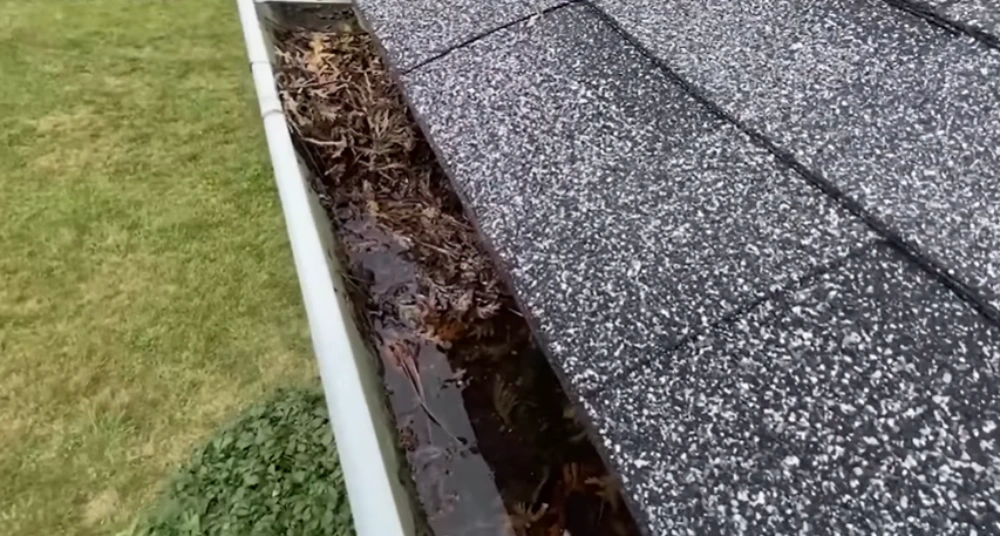 Clogged gutter wet leaves shingle roof
| Month | Average rain (Santa Cruz) | What’s happening to your glass |
|---|---|---|
| January to March | 6.46, 6.07 and 4.06 in | Storms spread dirt and leave spots; gutters overflow if full |
| April and May | 1.97 and 0.88 in | Rain eases, pollen arrives, fog season starts |
| June to September | 0.01 to 0.21 in a month | Little rain, frequent morning fog; salt film builds up fastest |
| October | 1.34 in | The last dry stretch before storms; a good time to clean |
| November and December | 3.27 and 6.47 in | Storm season returns |
The marine layer is most common in late spring and early summer, which is why many Californians call the season May Gray and June Gloom.
Sources: Santa Cruz average rainfall by month; CIMSS, The Marine Layer.
Santa Cruz County Neighborhoods That Get the Most Marine Layer Film
The closer you are to the open ocean, the more film builds up.
| Area | Why | Local guide |
|---|---|---|
| West Cliff Drive and the Westside | Open ocean, cliffs and wind | Westside guide |
| East Cliff Drive and Pleasure Point | Surf spray close to homes | Live Oak guide |
| Seabright and the Harbor | Beach and harbor mouth | Seabright guide |
| Capitola Village and Depot Hill | Bay-facing homes on the beach and bluff | Capitola guide |
| Rio Del Mar, Seacliff and Seascape | Beach and bluff homes with large view glass | Aptos guide |
What Salt Air Does to Frames, Screens and Tracks
The film doesn’t stop at the glass.
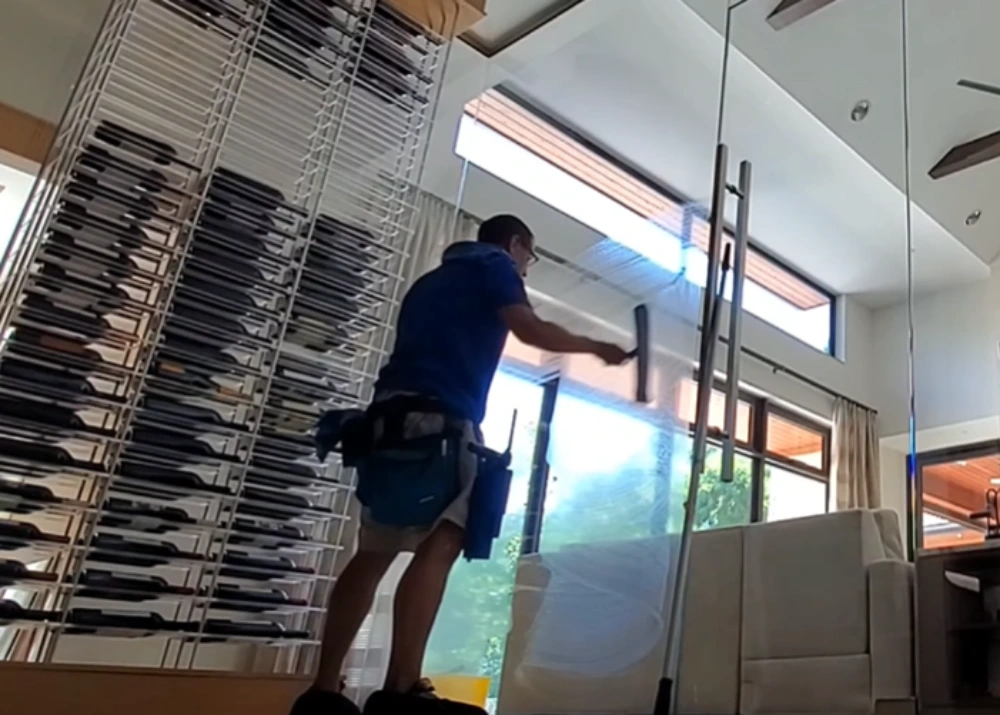 Interior glass wall squeegee pull
| Part | What salt air does | What helps |
|---|---|---|
| Aluminum frames | Oxidation leaves a chalky, rough surface on older frames | Regular wipe-downs; oxidation won’t fully clean off |
| Screens | Salt collects in the mesh and transfers back to glass when damp | Clean screens every time windows are cleaned |
| Metal clips and hardware | Corrosion over time | Replace hardware when it fails |
| Tracks | Salt and sand collect and make sliders drag | Vacuum and wipe tracks every visit |
See screen repair if your screens are torn or corroded.
Marine Layer Myths
Things people often assume about coastal windows.
| Myth | Reality |
|---|---|
| Fog is just water, so it can’t make windows dirty | Fog droplets form around tiny particles, and near the coast many are sea salt; the salt stays when the water evaporates |
| A good rain will wash the haze off | Rain spreads film around and leaves its own spots |
| Cleaning is pointless if they get dirty again | Regular cleaning keeps film from bonding with mineral spots and turning into stains |
| Only oceanfront homes are affected | Film is heaviest near the water but builds up inland too, just more slowly |
Salt Film vs Hard Water Spots
Both look white or hazy, but they’re different problems. For all five causes of white haze, see what causes white film on coastal windows.
| Salt film | Hard water spots | |
|---|---|---|
| Looks like | Even haze across the whole pane | Distinct rings and drops, often low on the glass |
| Where | Ocean-facing glass and skylights | Glass near sprinklers or hoses |
| Comes from | Fog and spray drying on the glass | Tap or irrigation water drying on the glass |
| Fix | A proper cleaning with a solution | Fresh spots clean off; old ones may need stain removal |
A Simple Routine for Coastal Windows
Small habits between professional cleanings.
- Check sprinklers each spring and aim them away from glass.
- Wipe the inside of sills after foggy weeks, where condensation and salt collect.
- Vacuum slider tracks when sand builds up.
- Don’t hose windows off and let them air dry.
- Book a clean early October and again in spring, more often right on the water.
When to Call a Professional
Some jobs are better left to someone with the right tools.
- Second-story and skylight glass, which needs ladders, roof access or a water-fed pole.
- Hard water spots that don’t wipe off, which may be etched and need testing first.
- Salt-crusted screens and frames that need removing and cleaning properly.
- Solar panels, which need deionized water and soft brushes, not a hose.
- Gutters before storm season, especially under trees.
See residential window cleaning for what a full visit includes, and how often to clean windows in Santa Cruz for a schedule. Our June Gloom window care guide covers the foggy months in detail.
Marine Layer and Window Cleaning FAQ
Why do windows get dirty so fast near the ocean?
Coastal fog leaves salt and minerals on the glass every time it evaporates. That happens night after night in foggy season, and with almost no summer rain nothing rinses it off. The film then catches dust and pollen, so oceanfront glass can look hazy within weeks.
What is the marine layer?
A layer of cool, moist air over the cold Pacific, capped by warmer air above it. Fog and low clouds form inside it, especially in late spring and early summer.
Does rain clean windows?
No. Rain spreads the film around and leaves its own spots as it dries.
How often do fog-belt windows need cleaning?
Quarterly for oceanfront homes, every four to six months within about a mile of the water, and twice a year inland.
Does the marine layer affect solar panels?
Yes. The same film coats panels and reduces the light reaching the cells. Rain doesn’t wash it off.
Is it usually foggy every day in Santa Cruz in summer?
Often in the mornings, but not usually all day. In late spring and summer the marine layer tends to form overnight, is thickest near dawn and burns off by late morning or early afternoon, though some days it lingers. That daily wet then dry cycle is what leaves film on glass.
Which months are wettest in Santa Cruz?
December and January, out of an average of about 30.8 inches a year. From June through September there is almost no rain, so fog film builds up with nothing to rinse it.
Does salt air damage window frames?
It can oxidize older aluminum frames and corrode metal clips over time. Regular cleaning slows the buildup.
Why do my screens make clean windows look dirty?
Salt collects in the mesh and transfers back onto the glass when it’s damp. Screens should be cleaned with the windows.
Is it even worth cleaning windows near the ocean if they get dirty again?
Yes. Regular cleaning stops salt film from bonding with mineral spots and turning into stains that need separate removal. It also keeps each clean quicker. Setting a schedule that fits how close you are to the water keeps the glass clear without cleaning more often than needed.
How do I tell salt film from hard water spots?
Salt film is an even haze across the whole pane. Hard water spots are distinct rings and drops, usually low on the glass near sprinklers.
What’s the best routine for coastal windows?
Aim sprinklers away from glass, vacuum tracks, avoid hosing windows off, and book a professional clean in early October and spring.
Can I clean salt film off windows myself?
Yes, on ground-floor glass. Use a cleaning solution and a squeegee in the shade, and clean the screens too. Leave upper floors and skylights to a professional.
Does the marine layer reach inland towns like Scotts Valley?
Fog and low clouds are common at night and in the morning there too, especially in summer, though homes farther from the ocean see less salt film than the coast.
Should I clean my windows before or after summer?
Both, if you live near the water. A clean in late spring sets the glass up for fog season, and another in early October clears the summer film before the rains.
Get Your Windows Clear Again
Tell us about the house and where it sits. You’ll hear back the same business day with a flat quote and a schedule that fits your part of the coast.
(831) 203-3111- Same-day response, Monday through Saturday
- Flat quote, good for 30 days
- Text a few photos and skip the form
Serving Santa Cruz, Capitola, Aptos, Soquel, Live Oak, Scotts Valley, Felton, Ben Lomond, Bonny Doon, Watsonville and everywhere in between.