
Marine Layer Season (June Gloom): A Window Care Guide
Late spring and early summer bring the marine layer: grey mornings, low cloud and fog along the coast. It barely rains, but every foggy morning leaves a little more salt film on the glass. Here’s what June Gloom does to windows and solar panels, and when to clean around it.
Call or text a few photos. Flat quote, usually the same day.
- What June Gloom is
- What it does to glass
- When to clean
- Month by month
Fog Without Rain Means Film That Builds Up
During June Gloom, fog settles on windows overnight and dries off by midday, day after day. With almost no rain to rinse the glass, the salt and particles it leaves behind accumulate into a hazy film. Coastal homes see it most on the ocean-facing side.
 Marine layer over the Santa Cruz coast
| Month | Average rain (Santa Cruz) | What it means for glass |
|---|---|---|
| May | 0.88 in or less | Fog season begins on the coast; pollen still around |
| June | Very little | Peak gloom; film builds on ocean-facing glass |
| July and August | Very little | Fog continues on many mornings; film keeps building |
| September | Very little | A good time to clean before the fall rains |
Santa Cruz averages about 30.8 inches of rain a year, almost all of it November through March. From May through September, monthly averages are 0.88 inches or less.
Sources: Santa Cruz average rainfall by month.
What Is June Gloom?
It’s the name for the overcast, cool pattern that settles over the California coast in late spring and early summer.
Low stratus clouds form over the cool California Current offshore and drift onto land with the prevailing westerly winds. A temperature inversion, warm air sitting above cooler air near the ocean, caps that marine layer and keeps it from rising and breaking up. The result is grey mornings and fog that usually burns off later in the day.
| Term | What it means |
|---|---|
| Marine layer | The layer of cool, moist air over the ocean that forms the low cloud and fog |
| Inversion | Warmer air above cooler air, which traps the marine layer near the ground |
| May Gray | The same pattern when it shows up in May |
| June Gloom | The pattern at its usual peak in June |
| No-Sky July, Fogust | Local nicknames when it continues into summer |
| Burn-off | When the sun heats the layer enough to clear it, usually late morning or early afternoon |
On strong days the clouds and fog can reach well inland, down valleys such as the Salinas Valley, but in general the effect is strongest right at the coast and weaker the farther inland you go.
Sources: Wikipedia, June Gloom.
How the Marine Layer Moves Through a Day
The daily cycle is what makes it hard on glass.
| Time | What usually happens | Effect on windows |
|---|---|---|
| After midnight | Low cloud moves in | Glass cools and collects moisture |
| Around dawn | Cloud and fog are thickest | Droplets settle on glass, screens and frames |
| Late morning to early afternoon | Sun burns it off | Moisture evaporates; salt and particles stay behind |
| Evening | Clear, or cloud returns on strong days | The cycle starts again |
Each cycle adds a little more. The aluminum industry’s cleaning guide describes the same thing on window frames: in foggy coastal regions, frequent cycles of condensation and drying can create a heavy build-up of atmospheric salts. Our marine layer guide goes into how that film forms.
Sources: Wikipedia, June Gloom; AAMA 609 and 610-09 Cleaning and Maintenance Guide for Architecturally Finished Aluminum.
What Fog Season Does to Windows, Screens and Solar
The glass isn’t the only thing that collects the film.
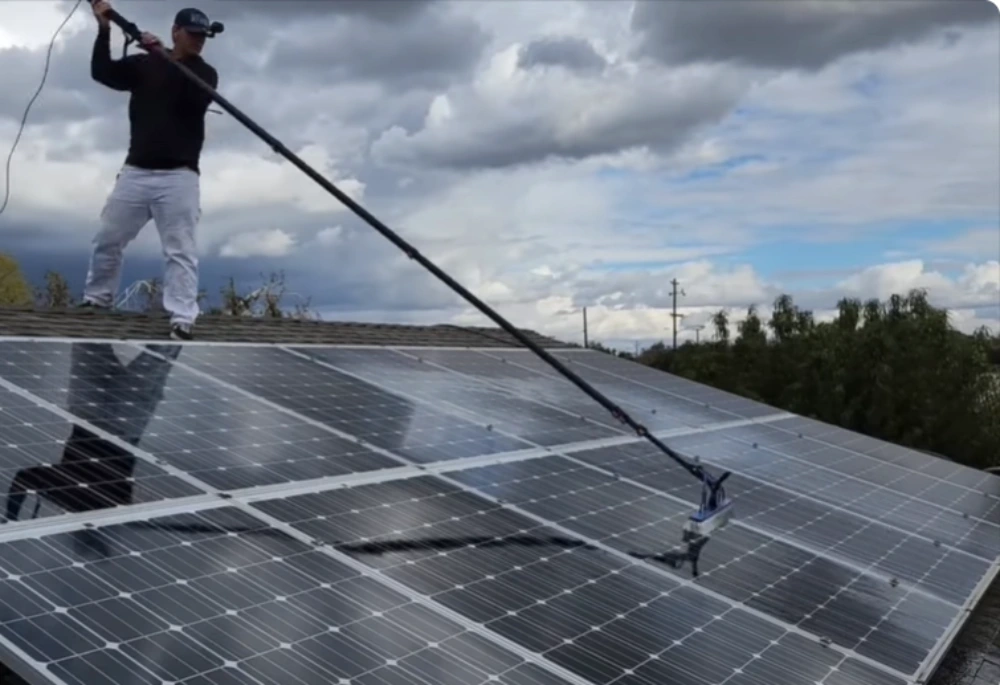 Cleaning large solar array extension pole
Window glass
A dull haze builds on ocean-facing glass. It catches dust and pollen and looks worse in low afternoon sun.
Residential window cleaningScreens
Mesh traps salt and dust. When it’s damp, that dirt can transfer back onto clean glass.
Screen repairSolar panels
Cloud cover cuts output while it lasts, and the film left on panels blocks more light once the sun is out.
Solar panel cleaningFrames and hardware
Salt settles on frames, tracks and locks. Milgard recommends lubricating hardware at least twice a year in coastal homes exposed to salt air.
Window track cleaningSources: Milgard, Window and Door Care Tips.
When to Clean Around June Gloom
Clean windows don’t stop fog, so time the visits to get the most out of them.
| Visit | Why | Who it suits |
|---|---|---|
| Late March to May | Clears winter storm streaks and spring pollen before fog season | Every home |
| Mid-summer | Clears salt film built up during the foggiest weeks | Oceanfront and bluff-top homes |
| September to early October | Clears the summer film before the rains; pairs with gutters and skylights | Every home |
| Before guests or listing photos | Clear glass when it matters most | Vacation rentals, sellers |
For a schedule by property type and distance from the ocean, see how often to clean windows in Santa Cruz.
Where June Gloom Hits Windows Hardest
Distance from the ocean decides how much film builds up.
| Area | Fog exposure | What to expect on glass |
|---|---|---|
| West Cliff Drive and the Westside | High | Salt film on ocean-facing glass within weeks |
| Seabright, Pleasure Point and East Cliff | High | Salt film; screens and tracks collect it too |
| Capitola, Seacliff and Rio Del Mar | High near the beach | Salt film plus hard water spots from sprinklers |
| Soquel and inland Aptos | Moderate | Lighter film; hard water is the bigger issue |
| Scotts Valley and the San Lorenzo Valley | Lower | Pollen, dust and needles more than salt |
| Watsonville | Varies | Field dust is usually the main issue |
June Gloom and Your Solar Panels
Two separate things cut solar output in fog season.
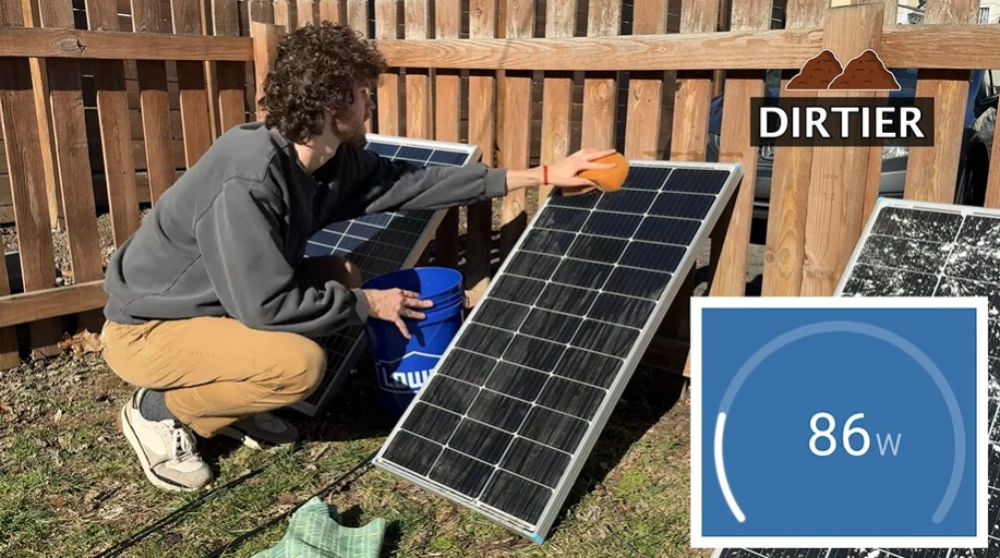 Cleaning dirty solar panel with sponge
| Cause | What it does | Can cleaning help? |
|---|---|---|
| Cloud and fog cover | Less sunlight reaches the panels while it lasts | No |
| Salt and dust film left by fog | Blocks some light even after the sky clears | Yes |
| Bird droppings and pollen | Shade parts of cells | Yes |
You can’t clean away the weather, but you can make sure the panels are clear for the long, sunny days that follow. It makes sense to line up panel cleaning with a window visit in late spring or summer. Always follow your panel maker’s cleaning instructions. See solar panel cleaning.
Vacation Rentals in Fog Season
Summer guests arrive right in the middle of fog season on the coast.
 Pure water window cleaning two-story house
Guests notice the view windows and slider doors first. On beach rentals, salt film can make those look grey within weeks, so a quick exterior clean of the view glass between stays, plus a full clean on a set schedule, keeps them looking right through the season.
- View windows and slider doors facing the ocean
- Glass railings and balcony doors
- Screens on ocean-facing windows
- Slider tracks full of beach sand
See how often to clean windows for a full schedule by property type.
A Late Spring Checklist
A few jobs to do in April or May, before the gloom settles in.
| Job | Why now |
|---|---|
| Full window clean, inside and out | Clears winter streaks and spring pollen |
| Screens washed and checked | Torn mesh is easier to fix before summer |
| Tracks vacuumed and weep holes cleared | Removes winter debris and sand |
| Solar panels cleaned | Ready for the long days once fog clears |
| Sprinklers adjusted off the glass | Stops new hard water spots all summer |
| Window hardware lubricated | Salt air near the coast is hard on locks and rollers |
Ask about combining windows, solar and gutters in one visit with the windows, gutters and solar combo.
Keeping Glass Clearer Through Fog Season
A few habits slow the film down.
- Keep sprinklers off windows, especially in the morning when glass is already wet from fog
- Don’t hose the windows to rinse them; tap water adds mineral spots
- Wipe inside condensation off glass and sills on cold, damp mornings
- Vacuum sand and salt out of slider tracks
- Close windows on heavy fog mornings to keep damp air off inside sills
- Book a clean after the foggiest stretch, not in the middle of it
If the film doesn’t come off with a damp cloth, it may be hard water minerals rather than salt. Our guide to white film on coastal windows explains how to tell them apart.
Cleaning Windows on Grey Mornings
Fog doesn’t stop us, and it often helps.
| Conditions | Can we clean? | Notes |
|---|---|---|
| Overcast, dry | Yes | Good conditions; solution doesn’t dry too fast |
| Light fog | Yes | Exterior glass may be done after burn-off if it’s dripping |
| Drizzle wetting the glass | Inside only, or reschedule | Exterior glass would just re-spot |
| Rain | Exterior rescheduled | We text you to move the visit |
| Hot afternoon sun | Yes, with care | We work the shady side first |
Because the solution doesn’t dry instantly on cool, overcast mornings, it’s easier to get streak-free results. For upper glass we use deionized water, which dries without spots.
June Gloom and Your Windows: FAQ
What is June Gloom?
A late spring and early summer weather pattern on the California coast, with low clouds, fog and cool temperatures, especially in the mornings. May and June are usually the cloudiest months on the coast.
Why is June Gloom bad for windows?
Fog settles on glass and dries again day after day with little rain to rinse it off. That leaves a salt and mineral film that builds up and catches dust and pollen.
When should coastal homes schedule window cleaning around the fog?
Early fall, before the rains, and spring, after the storms. Homes close to the ocean also benefit from a clean in late spring or summer during the foggy months.
Should I clean my windows before or after June Gloom?
Both, if you’re close to the coast. A clean in May clears winter and pollen, and a clean after the foggy months clears the salt film that built up.
Does fog make windows dirty?
Yes, near the ocean. Fog droplets carry salt and particles, and when they dry on glass they leave a thin film. Repeated foggy mornings make it thicker.
Does June Gloom affect solar panels?
Cloud cover reduces sunlight while it lasts, and the salt and dust film that fog leaves on panels can cut light further once the sun comes out. Cleaning removes the film; it can’t change the weather.
What does May Gray mean?
It’s a name for the same overcast pattern when it shows up in May. There are other local nicknames too, like No-Sky July and Fogust.
About what time of day does the fog burn off in Santa Cruz?
Usually by late morning or early afternoon. The marine layer tends to form overnight, is thickest near dawn and then burns off, though on some days it lingers. Foggy mornings are common in late spring and summer, and they’re fine for window cleaning as long as drizzle isn’t wetting the glass.
Can you clean windows when it’s foggy?
Yes. Fog doesn’t stop window cleaning, and cool, overcast mornings are easier for streak-free glass than hot sun. Drizzle heavy enough to wet the glass is the exception.
How often should beach houses be cleaned during fog season?
Ocean-facing glass on beachfront homes usually needs cleaning about every three months year-round, and fog season is when the film builds fastest.
Is June Gloom the same as fog?
Mostly. It’s low stratus cloud from the marine layer, which reaches the ground as fog along the coast. It often comes with mist or light drizzle but rarely real rain.
Does June Gloom happen every year?
Overcast late spring and early summer mornings are a regular pattern on the California coast, but how strong and how long it lasts changes from year to year.
Get a Free Window Cleaning Quote in Santa Cruz County
Send your address and a few photos. You’ll hear back the same business day with a flat number.
(831) 203-3111- Same-day response, Monday through Saturday
- Flat quote, good for 30 days
- Add gutters, solar or skylights to the same visit
Serving Santa Cruz, Capitola, Aptos, Soquel, Live Oak, Scotts Valley, Felton, Ben Lomond, Bonny Doon, Watsonville and everywhere in between.