
Hard Water Stain Removal in Santa Cruz, CA
Cloudy white spots that don’t come off with a normal wash are mineral deposits bonded to the glass. They come from sprinklers, hose water and coastal fog. We remove them from windows, sliding doors and glass railings, and we tell you up front whether your glass will come all the way back.
Call or text a few photos. Flat quote, usually the same day.
- Graded before we quote
- Tested on a corner first
- Frames and sills protected
- Straight answer on etched glass
What Are Hard Water Stains on Windows?
Hard water stains are calcium and magnesium deposits left behind when mineral-heavy water dries on glass. The water evaporates; the minerals don’t. Each new wetting adds another layer, and over months the deposit bonds to the glass surface so tightly that soap and a squeegee slide right over it.
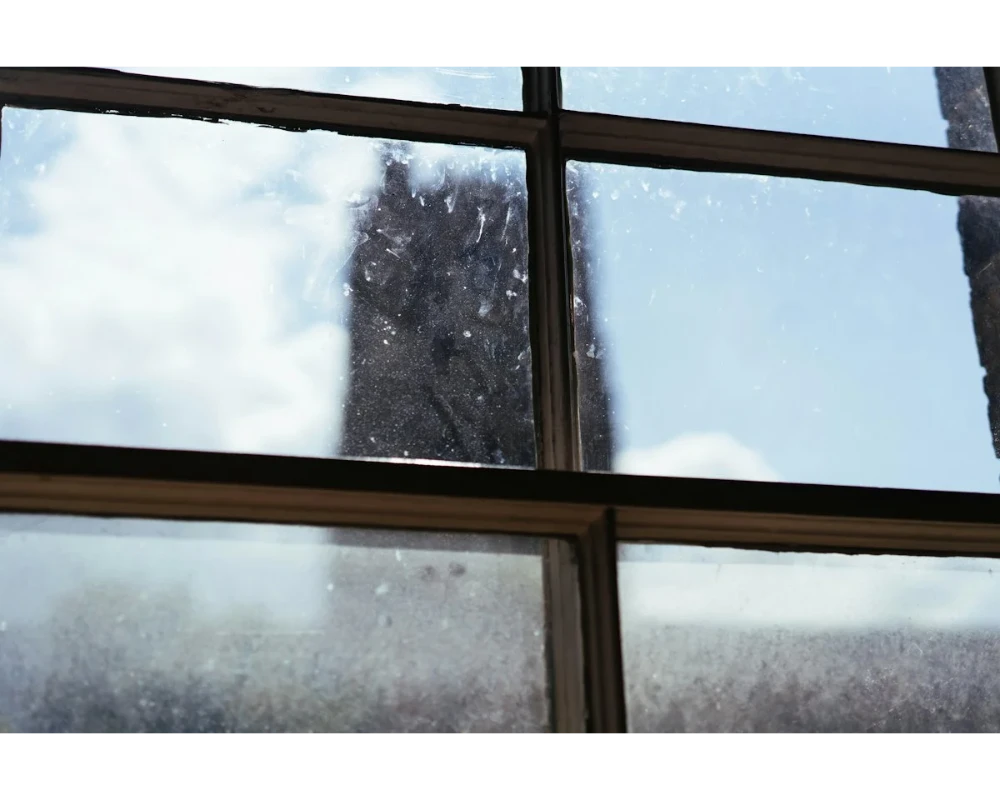 Mineral haze and spotting on window glass
Sprinklers
A very common cause. A sprinkler head aimed a few degrees off hits the same lower panes every morning, and the spots build in a fan pattern.
Hose rinsing and DIY cleaning
Rinsing windows with tap water and letting them air dry leaves a spot wherever a drop dried. Doing it in direct sun makes it worse.
Marine layer and salt
Fog and ocean spray carry dissolved salt and minerals. Glass near West Cliff, Pleasure Point and Rio Del Mar gets a mineral film even without sprinklers. Solar panels get the same film. Our guide to white film on coastal windows explains how to tell salt, minerals and etching apart.
Solar panel cleaningIs Santa Cruz County water actually hard? In parts of it, yes. Soquel Creek Water District, which serves Capitola, Soquel, Aptos, Rio Del Mar and La Selva Beach from groundwater wells, describes its own water as hard to very hard, roughly 6 to 22 grains per gallon depending on the area. The USGS calls anything over 10.5 grains per gallon very hard. That’s the water coming out of a lot of mid-county sprinklers.
The Three Stages of Hard Water Damage on Glass
We grade your glass before we quote, because the stage decides the method and whether the glass can be fully restored.
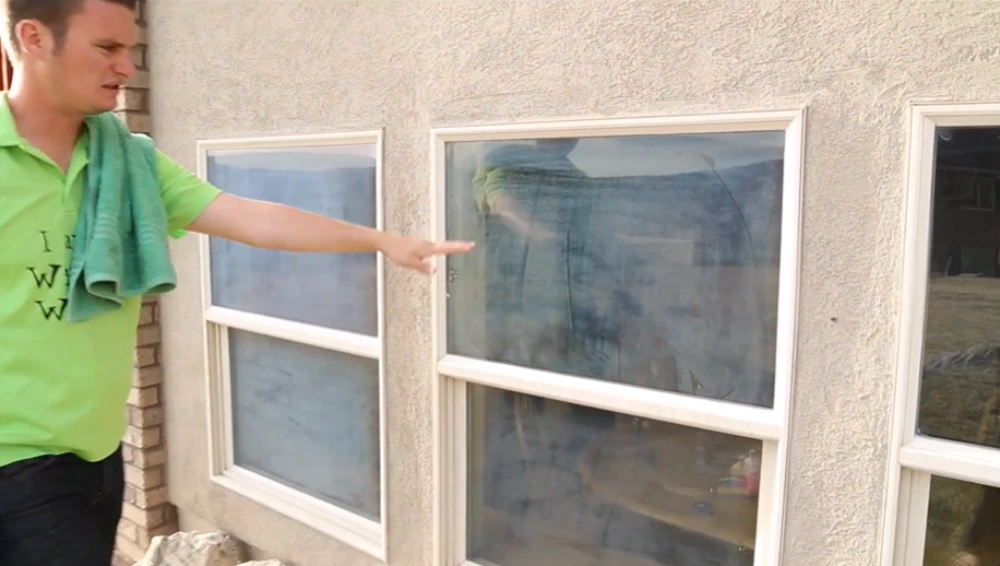 Window cleaner pointing at dirty window
| Stage 1: Surface deposits | Stage 2: Bonded staining | Stage 3: Etched glass | |
|---|---|---|---|
| What you see | Light white spots and haze | Heavy cloudy spots that a regular wash doesn’t move | Rough, pitted areas that stay cloudy even when wet |
| What’s happening | Minerals sitting on top of the glass | Minerals bonded to the glass surface | Minerals have chemically attacked the glass and left pits |
| How we treat it | Mineral remover during a normal clean | Mineral remover plus a fine polishing pad, worked in sections | Glass polishing compound for improvement on small areas |
| Will it come all the way back? | Yes | Usually, yes | Often not fully; we say so before we start |
| How we quote it | Part of the standard window clean | Separate line item, per pane or area | Test area first, then a quote, or a referral for glass replacement |
Can hard water stains be removed from windows? Stage 1 and stage 2 deposits, almost always. Stage 3 etching can usually be improved but often can’t be erased, because the glass surface itself is damaged. We test a small corner first so you see the result before you pay for the whole job.
How We Remove Hard Water Stains Without Damaging Your Glass
The goal is to dissolve and lift the minerals, not to grind the glass. That means the right product, light pressure, and patience.
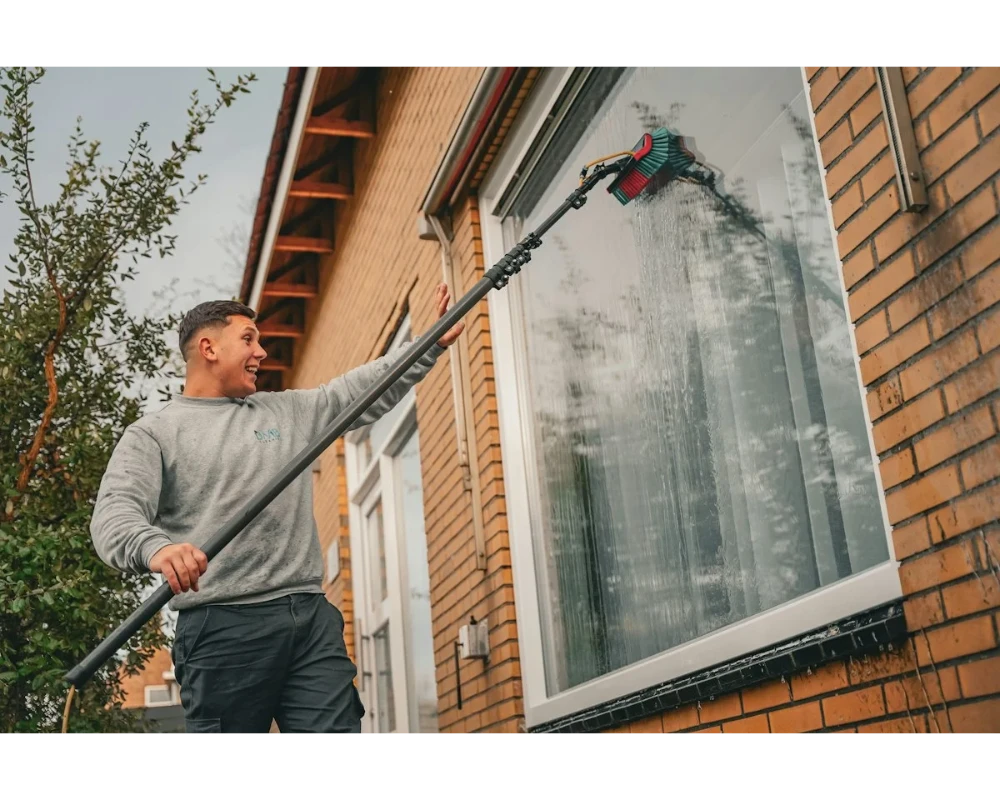 Pure water rinse after mineral treatment
What we do
- Grade the glass. We look at the panes in good light and tell you the stage before any work starts.
- Protect the surroundings. Mineral removers can mark aluminum frames, painted trim and stone sills, so we mask and protect them.
- Test a corner. One small area first, so you see the result before we do the whole pane.
- Work in sections. Remover applied with a non-scratch pad, worked lightly, then rinsed before it dries.
- Pure water rinse. Deionized water so the rinse itself doesn’t leave new spots.
- Finish clean. Squeegee and detail wipe, then a final look in daylight from inside and out.
What we never do
- Scrape tempered glass with a razor blade, which can scratch it
- Use steel wool or abrasive scouring pads
- Leave product to dry on the glass in direct sun
- Promise an etched pane will look new
- Skip the test area on coated or tinted glass
Why Hard Water Stains Come Back, and What We Do Differently
If you’ve already tried something and the spots are still there, here’s why, and what we do differently.
“I scrubbed with vinegar and nothing changed.”
Vinegar can soften light deposits. Bonded stage 2 deposits need a stronger mineral remover and a polishing pad.
“The last window cleaner said the spots were permanent.”
Sometimes that’s true. Often it isn’t. We test a corner so you can see for yourself.
“They charged me for stain removal and the spots are still there.”
We grade the glass and test first, so you know what’s realistic before you pay. Our guide on whether hard water stains can be removed explains the severity scale.
“The spots came back in a month.”
That usually means the sprinkler is still hitting the glass. We point out the source so the fix lasts.
“I’m selling and the slider looks foggy in photos.”
Glass doors and ocean-view panes are the ones buyers notice. We prioritize them and tell you what’s achievable before listing day.
“I didn’t want anything scratching my new windows.”
No razors on tempered glass, no abrasive pads, and a test area first.
How Much Does Hard Water Stain Removal Cost?
It depends on the stage and how much glass is affected, so we quote after we’ve seen it. Here’s what moves the number:
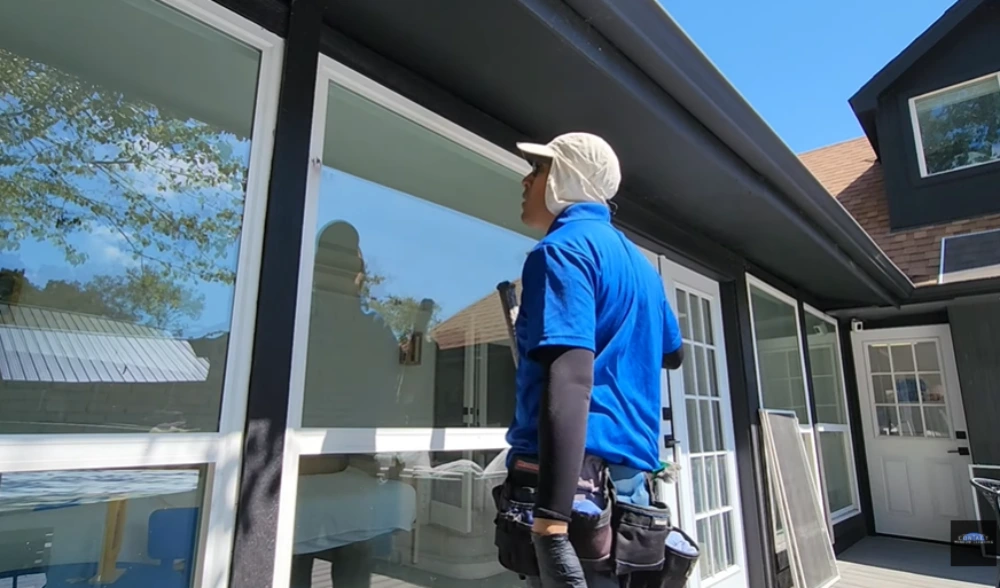 Window cleaner inspecting picture window
Stage of the damage
Stage 1 is part of a normal clean. Stage 2 takes real time per pane. Stage 3 gets a test area before any quote.
How many panes
A ring of spots on two lower panes by the sprinkler is a different job from a whole wall of ocean-facing glass.
Access
Ground-floor sliders are quick to reach. Second-story picture windows and glass deck railings over a slope take more setup.
Text us a few close-up photos of the stained glass and one wide shot of the window. You’ll usually get a flat quote back the same day.
How to Prevent Hard Water Stains on Windows
Removal fixes the glass. These keep it fixed.
Redirect the sprinklers
Adjust or swap the heads that hit the glass. This alone stops most new spotting.
Don’t rinse with tap water
Hosing windows off and letting them air dry is how most deposits start. If glass gets wet, dry it.
Keep a regular schedule
Glass cleaned every few months never gets past stage 1. Deposits left for years are the ones that etch.
Residential window cleaningDo glass protectant coatings help? A hydrophobic coating can make water bead and run off instead of drying in place, which slows new spotting. It doesn’t fix existing damage, and it doesn’t replace fixing a sprinkler that hits the glass.
How Hard Is the Water in Santa Cruz County?
Hardness depends on which water system serves your home. Here’s what the local suppliers publish.
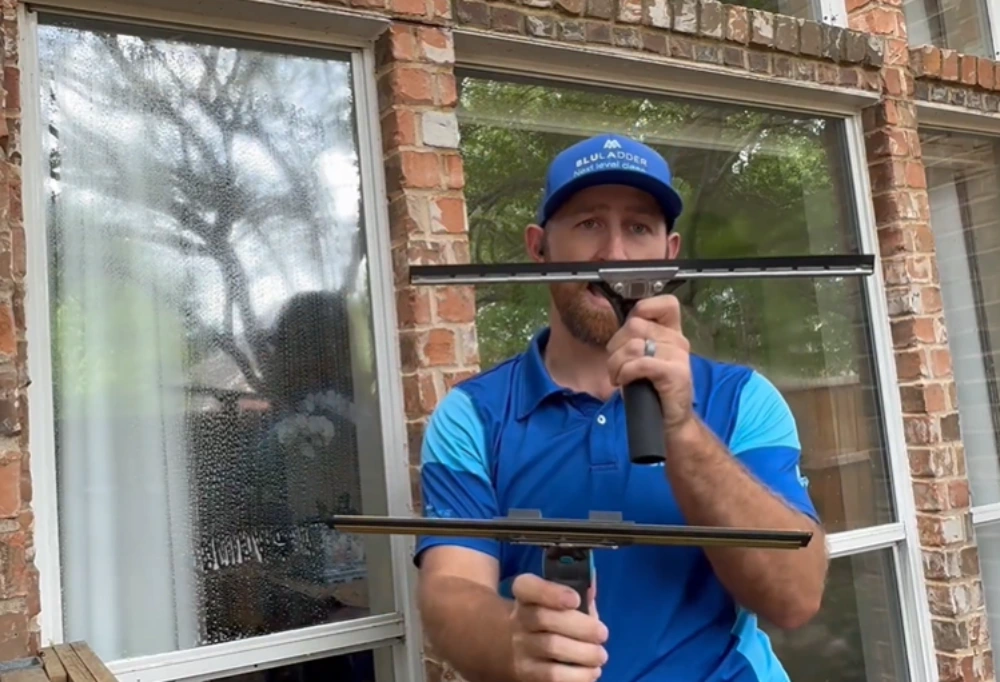 Window cleaner holding two squeegees
| Water system and area | Published hardness | Classification |
|---|---|---|
| City of Santa Cruz (city, most of Live Oak west of 41st Avenue) | Described as moderately hard | Moderately hard |
| Soquel Creek Water District: western Capitola and Soquel | 150 to 370 ppm | Hard to very hard |
| Soquel Creek Water District: Soquel and Aptos | 140 to 300 ppm | Hard to very hard |
| Soquel Creek Water District: Aptos and Rio del Mar | 150 to 200 ppm | Hard to very hard |
| Soquel Creek Water District: La Selva Beach | 100 to 200 ppm | Moderately hard to very hard |
| San Lorenzo Valley Water District, main system (2022 average) | 108 ppm | Moderately hard |
| San Lorenzo Valley Water District, Felton system (2022 average) | 218 ppm | Very hard |
| Hardness (mg/L as calcium carbonate) | Classification |
|---|---|
| 0 to 60 | Soft |
| 61 to 120 | Moderately hard |
| 121 to 180 | Hard |
| Over 180 | Very hard |
For water, ppm and mg/L are effectively the same. Homes on private wells or other systems can differ; your supplier’s annual water quality report lists your hardness.
Sources: City of Santa Cruz Water Department, Water Quality FAQs; Soquel Creek Water District, Water Hardness; San Lorenzo Valley Water District 2022 water quality report; USGS, Water Hardness FAQ.
Glass Surfaces We Remove Hard Water Stains From
Anywhere water dries on glass, minerals stay behind.
| Surface | Common cause | Notes |
|---|---|---|
| Lower windows | Sprinkler overspray | Often the worst-affected glass on a house |
| Sliding glass doors | Sprinklers, hosing patios | Often heavier at the bottom of the pane |
| Glass railings and balconies | Rain, sprinklers, hose rinsing | Both sides need treating |
| Shower doors | Daily shower water | Same minerals as outdoor spots |
| Skylights | Water drying on a flat or low-pitch surface | Acrylic domes need gentle methods only |
Coated, tinted or tempered glass may limit which methods can be used. Some glass makers warn that certain cleaning products can harm coatings, so we check the glass and test a small area first.
Hard Water Stain Removal FAQ
Straight answers about spots that won’t come off.
What causes hard water stains on windows?
Calcium and magnesium left behind when mineral-heavy water dries on glass. In Santa Cruz County the usual sources are sprinklers, hose rinsing, and fog and salt spray near the coast.
Can hard water stains be removed from windows?
Surface deposits and bonded staining almost always can. Glass that has etched can usually be improved but often can’t be fully restored, and we tell you that before we start.
Does vinegar remove hard water stains?
Vinegar can soften light, fresh deposits. It rarely moves older bonded stains, and it does nothing for etched glass.
Will removing hard water stains scratch my glass?
Not with the right method. We use mineral removers and non-scratch pads with light pressure, never razors on tempered glass, and we test a corner first.
How long does hard water stain removal last?
The deposits are gone once removed. New spots form if the source continues, so the sprinkler or hose habit that caused it needs to change.
Is hard water stain removal part of a regular window cleaning?
Light stage 1 spotting comes off in our standard clean. Heavier staining is quoted as its own line item so there are no surprises.
Can you remove hard water stains from glass railings and shower doors?
We handle exterior glass railings and patio doors along with windows. Ask about other glass when you call.
How do I know if my windows are etched?
If the cloudy area still looks cloudy when the glass is wet, or feels rough to a fingertip, it’s likely etched. Send us a close-up photo and we’ll tell you.
Is Santa Cruz water hard?
City of Santa Cruz water is described as moderately hard. Soquel Creek Water District, which serves Capitola, Soquel and Aptos, lists 100 to 370 ppm depending on area, which is hard to very hard.
Do you remove hard water stains from shower doors?
Yes. The minerals are the same as on outdoor glass, and the same testing and methods apply.
Is it safe to use CLR on glass or tinted glass?
Check before you use it. Some glass makers warn that certain cleaning products can harm coatings, so read what your window maker and any film maker allow. Test a small area first, keep mineral removers off aluminum frames, painted trim and stone sills, and never let product dry on the glass in sun.
How do I find out how hard my water is?
Check your water supplier’s annual water quality report, which lists hardness. Homes on private wells can have the water tested.
Any tips for removing hard water stains from exterior windows?
Start gentle and test a small corner. Vinegar can soften light, fresh spots. Bonded stains need a mineral remover worked lightly with a non-scratch pad, then rinsed before it dries. Protect frames and sills, never use steel wool or a razor on tempered glass, and don’t work in direct sun. Then stop the sprinkler or hose that caused it.
Lawn sprinklers sprayed my windows for years and Windex doesn’t touch it. What now?
Glass cleaner can’t dissolve minerals, so that’s expected. Years of sprinkler spray usually means bonded staining and sometimes etching. We grade the glass, test a corner, then use a mineral remover and a fine polishing pad. Etched areas can often be improved but not fully restored, and we tell you before we start. Turn the sprinkler heads away from the glass too.
How do I know if there are hard water stains on my windows?
Look for white spots or haze that a regular wash doesn’t move, often in a fan pattern on lower panes near sprinklers. If the area still looks cloudy when wet and feels rough, it may be etched. Text us a close-up photo of the worst pane in good light and we’ll tell you the stage.
Get a Free Hard Water Stain Quote
Send close-up photos of the worst panes and one wide shot. We’ll grade the glass and send a flat quote, usually the same business day.
(831) 203-3111- Glass graded before any quote
- Test area before the full job
- Flat quote, good for 30 days
Serving Santa Cruz, Capitola, Aptos, Soquel, Live Oak, Scotts Valley, Felton, Ben Lomond, Bonny Doon, Watsonville and everywhere in between.