
How to Protect Windows From Salt Air and Ocean Spray
You can’t stop salt air reaching your windows, but you can stop it doing damage. Regular cleaning keeps salt film from building up, and caring for frames, tracks, hardware and screens keeps salt from wearing them out. Here’s what window makers recommend for coastal homes.
Call or text a few photos. Flat quote, usually the same day.
- Short answer
- Glass
- Frames and hardware
- Screens and tracks
Regular Cleaning Is the Best Protection
Salt arrives on fog and spray and dries on everything facing the ocean. On glass, it’s a film that cleans off. On frames, tracks, locks and screens, it can speed up wear. Cleaning on a regular schedule, lubricating hardware and keeping drainage clear are what protect coastal windows.
 Walton Lighthouse at the Santa Cruz Harbor
| Part | What salt does | How to protect it |
|---|---|---|
| Glass | Leaves a hazy film that catches dust | Clean on a schedule that matches your distance from the water |
| Frames | Builds up on the finish | Gentle cleaning with mild soap; rinse |
| Locks, handles, rollers | Stiffen and wear | Lubricate at least twice a year on the coast |
| Tracks and weep holes | Fill with salt, sand and grit | Vacuum, wipe and keep weep holes clear |
| Screens | Mesh and frames wear and corrode | Clean with windows; repair early |
Sources: Milgard, Window and Door Care Tips.
How Salt Gets on Your Windows
It doesn’t take a storm.
Every foggy morning, droplets settle on glass and frames and dry by midday, leaving a little salt behind. The aluminum industry’s cleaning guide puts it directly: in foggy coastal regions, frequent cycles of condensation and drying can create a heavy build-up of atmospheric salts. Wind adds spray on top, especially on bluff and beachfront homes.
Salt also attracts moisture, so a salty film stays slightly damp and catches dust and pollen. Rain doesn’t rinse it away properly; it spreads it around. See our marine layer guide for more on why coastal glass gets dirty so fast.
Sources: AAMA 609 and 610-09 Cleaning and Maintenance Guide for Architecturally Finished Aluminum.
Protecting the Glass
Glass itself handles salt well. The film is the problem.
| Do | Don’t |
|---|---|
| Clean with mild soap and water and squeegee dry | Scrub salt off dry glass; it’s gritty |
| Clean on a regular schedule | Wait until the film is thick |
| Keep sprinklers off the glass | Let tap water dry on the windows |
| Check what coatings your glass has before using new products | Use abrasive pads or razor blades on unknown glass |
Milgard recommends mild dish soap and water for glass. The IWCA notes that some tempered glass scratches easily, and glass makers such as Cardinal publish strict cleaning rules for their coated glass. If you’re considering a protective coating, check with your window maker first.
Sources: Milgard, Window and Door Care Tips; IWCA, Glass Surface Information; Cardinal Glass, IG12 glass cleaning bulletin.
Protecting Window Frames
Frames take as much salt as the glass, and they’re harder to replace.
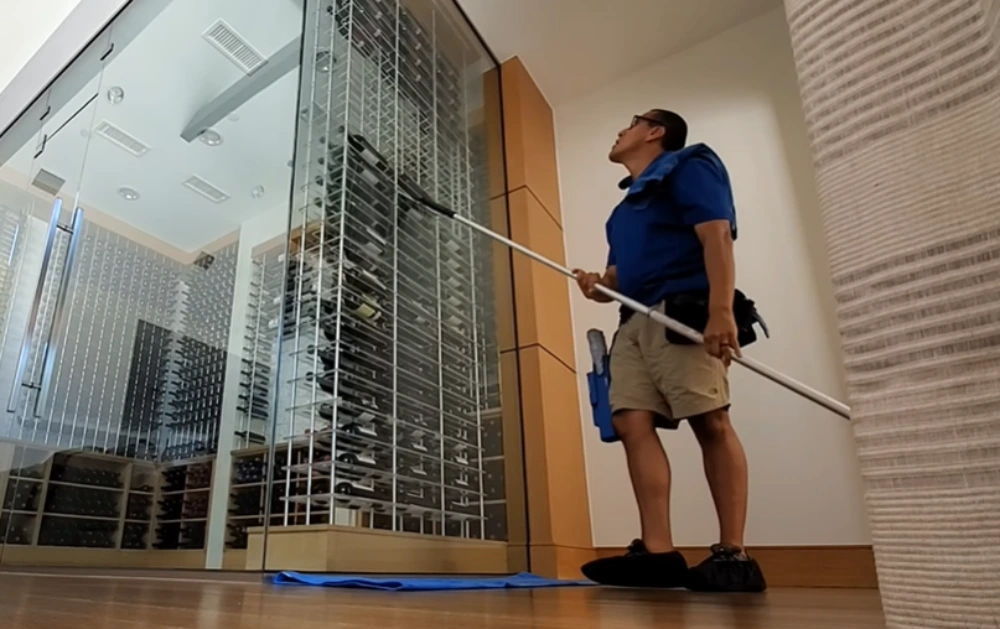 Cleaning glass wine cellar walls pole
The AAMA cleaning guide for finished aluminum recommends mild soap with a soft brush or sponge, no heavy abrasive rubbing, cleaning when the metal is shaded, and always rinsing afterwards. It also notes that the more often a finish is cleaned, the easier and less costly the next cleaning is. Milgard warns never to use abrasive or acidic cleaners on frames, because they might cause permanent damage to the finish.
| Frame type | Salt concern | Care |
|---|---|---|
| Aluminum | Salt build-up on the finish | Mild soap, soft brush, rinse, in shade |
| Vinyl | Film and grime; hardware still exposed | Mild soap and water |
| Wood | Moisture and finish wear | Gentle cleaning; keep paint or stain in good repair |
| Fiberglass and composite | Film on the surface | Mild soap and water; follow the maker’s guide |
Sources: AAMA 609 and 610-09 Cleaning and Maintenance Guide for Architecturally Finished Aluminum; Milgard, Window and Door Care Tips.
Locks, Handles and Rollers
Salt air is hard on moving parts.
Milgard recommends lubricating window and door hardware at least once a year, and at least twice a year for coastal homes exposed to salt air. Use the lubricant your window or door maker recommends, and clean the hardware first so you’re not working salt and grit into it.
| Symptom | Likely cause | What to do |
|---|---|---|
| Stiff lock or latch | Salt and dirt in the mechanism | Clean, then lubricate as the maker advises |
| Slider drags | Grit in the track or worn rollers | Clean the track; have rollers checked if it still drags |
| Handle hard to turn | Dry or corroded parts | Lubricate; replace if corroded |
Sources: Milgard, Window and Door Care Tips.
Tracks and Weep Holes
Salt, sand and water all end up in the track.
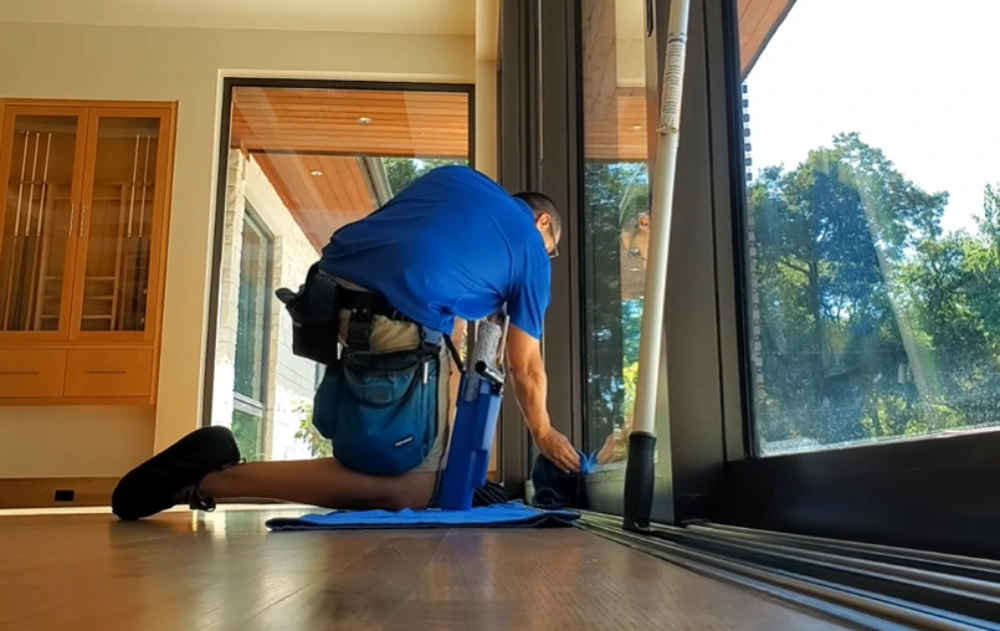 Wiping sliding door track and sill
Window tracks are designed to collect some water and drain it to the outside through weep holes. Milgard’s guidance is that the weep system lets water drain out as it builds up, and that weep holes should be kept clear, using a soft brush if necessary. Bob Vila’s guide adds: never caulk them shut. On coastal homes, sand and salt fill tracks faster, so clean them every time the windows are cleaned.
See do window cleaners clean window tracks for the full guide.
Sources: Milgard, Window and Door Care Tips; Milgard, How to Maintain Your Sliding Window; Bob Vila, Window Weep Holes.
Screens on Coastal Homes
Screens sit in front of the glass and take the salt first.
| Problem | What helps |
|---|---|
| Salty, grey mesh | Brush and rinse screens with every window clean |
| Salt transferring back to clean glass | Clean screens before refitting them |
| Corroded or torn mesh | Rescreen early, before tears spread |
| Bent frames from wind | Repair or replace the frame |
When rescreening, ask your screen supplier which mesh suits a coastal home. See screen repair.
A Protection Schedule for Coastal Homes
Distance from the water sets the pace.
| Where you are | Glass and screens | Hardware lubrication |
|---|---|---|
| Oceanfront or bluff-top | Every 3 months | At least twice a year |
| A few blocks from the beach | 3 times a year | At least twice a year |
| Inland | Twice a year | At least once a year |
Lubrication frequencies are from Milgard’s care guidance; cleaning schedules are our suggestions. See how often to clean windows in Santa Cruz.
Sources: Milgard, Window and Door Care Tips.
Salt Air Myths
Some popular tips do more harm than good.
| Myth | Reality |
|---|---|
| Vinegar is the best salt remover | Salt dissolves in water; acidic cleaners can damage frame finishes |
| Hosing windows rinses the salt off | It moves salt and leaves mineral spots from tap water |
| Rain will wash it away | Rain spreads the film and leaves its own spots |
| A coating means no more cleaning | Coatings may make cleaning easier, not unnecessary |
| Only the glass needs attention | Frames, hardware, tracks and screens take salt too |
Sources: Milgard, Window and Door Care Tips.
Where Salt Air Hits Hardest
The closer to the water, the more it matters.
| Area | Exposure |
|---|---|
| West Cliff Drive | Open bay, cliffs and wind |
| Pleasure Point and East Cliff | Surf spray off the breaks |
| Seabright | Beach and harbor |
| Capitola and Seacliff | Bluffs and village beach |
| Rio Del Mar | Beachfront and bluff homes |
What a Coastal Window Visit Covers
Salt gets everywhere, so the visit does too.
Screens out first
Screens are brushed and rinsed so they don’t put salt back on clean glass.
Tracks and weep holes
Sand and salt vacuumed out; weep holes cleared so tracks drain.
Frames wiped
Frames and sills wiped with mild soap and water.
Exterior glass
Scrubbed and rinsed with deionized water, which dries without adding mineral spots.
Interior glass
Washed and squeegeed with floors protected.
Hardware check
We point out stiff locks, dragging rollers or corroded screens so you can get them seen to.
Coastal Homes You Don’t Live In Full Time
Salt keeps building whether anyone’s there or not.
Vacation homes and rentals near the beach can sit for weeks with nobody wiping a slider or opening a window. Salt film builds on the glass, sand settles in the tracks and hardware stiffens. A recurring schedule, with a text before each visit and photos after, keeps the place ready for guests or your next stay. See commercial and rental window cleaning.
After Winter Storms
Storms bring wind-driven spray and debris.
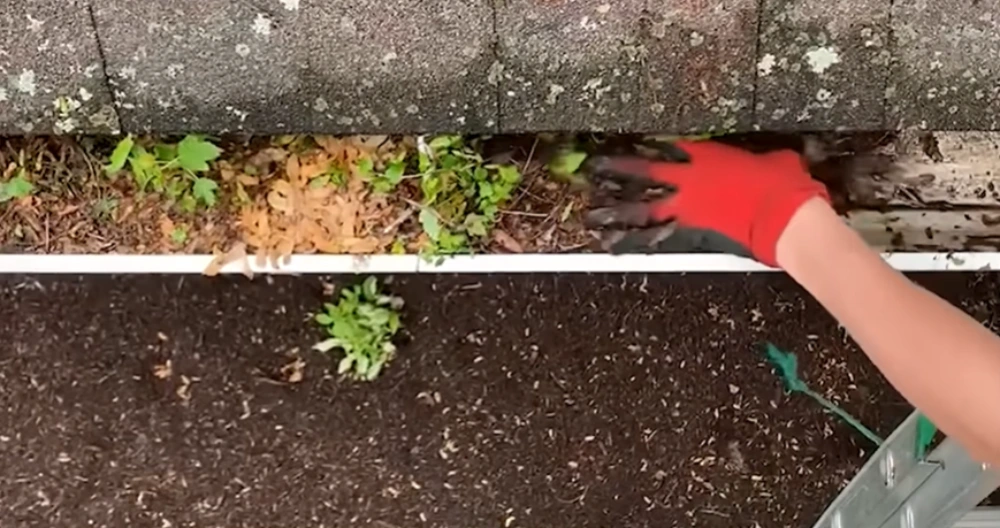 Clearing gutter debris by hand
Winter storms push spray and grit much farther inland than a normal day, and they leave streaks and debris on glass, frames and tracks. A spring clean after the storm season, with tracks and weep holes checked, gets coastal windows back to a clean starting point for the dry months.
Protecting Windows From Salt Air: FAQ
How do I protect my windows from salt air?
Clean them regularly, keep frames, tracks and hardware clean and lubricated, and keep weep holes clear. Regular cleaning stops salt film from building up into something harder to remove.
Does salt air damage windows?
Salt film on glass is mostly a cleaning problem, but salt on frames, tracks, locks and screens can speed up wear and corrosion, especially on metal parts.
How often should coastal windows be cleaned?
Ocean-facing glass on homes right on the water usually needs cleaning about every three months. A few blocks back, two or three times a year is often enough.
Should I use vinegar to clean salt off windows?
You don’t need it. Salt dissolves in water, so mild soap and water removes it. Milgard warns that acidic cleaners can permanently damage frame finishes, so keep vinegar off frames.
How often should window hardware be lubricated near the coast?
Milgard recommends at least twice a year for coastal homes exposed to salt air, and at least once a year elsewhere. Use the lubricant your window maker recommends.
Is there a product I can put on windows to keep the salt off?
Not one that stops it. Some coatings make glass easier to clean, but nothing keeps salt from landing on it, and a coating doesn’t mean no more cleaning. Check with your window maker before applying any product, especially to coated glass. Regular cleaning on a schedule that matches your distance from the ocean keeps salt film down.
Can salt air ruin window screens?
It can shorten their life, especially metal mesh and frames. Cleaning screens with the windows and replacing torn mesh early helps.
Should I rinse my windows with a hose to remove salt?
Not with tap water, which leaves mineral spots as it dries. Clean the glass properly or have it rinsed with pure water.
What happens if salt builds up for years?
Glass usually cleans up, but frames, tracks, rollers and locks wear faster, and mineral spots from sprinklers can bond to the glass alongside the salt.
Do you clean windows on oceanfront homes?
Yes. We clean glass, frames, tracks and screens on coastal homes across Santa Cruz County, often on a recurring schedule.
Are aluminum windows a problem near the ocean?
They can be used near the ocean, but the finish needs regular gentle cleaning. The AAMA guide notes that the more often aluminum is cleaned, the easier the next cleaning is.
How do you remove salt spray film and pits from glass windows?
Salt film comes off with mild soap and water and a squeegee, or a scrub and pure water rinse, because salt dissolves easily. Pits are different. If the glass is pitted, it has been chemically attacked, and that can only be improved with polishing, not always removed. We test a small area first and tell you what’s realistic.
Do vacation homes need more frequent cleaning?
Often, because salt and sand build up between visits with no one to notice. A recurring schedule keeps them guest-ready.
How do I know if salt is damaging my frames?
Look for a chalky or rough finish, pitting on metal, stiff hardware and screens with corroded mesh. Gentle regular cleaning and lubrication slow it down.
Get a Free Window Cleaning Quote in Santa Cruz County
Send your address and a few photos. You’ll hear back the same business day with a flat number.
(831) 203-3111- Same-day response, Monday through Saturday
- Flat quote, good for 30 days
- Add gutters, solar or skylights to the same visit
Serving Santa Cruz, Capitola, Aptos, Soquel, Live Oak, Scotts Valley, Felton, Ben Lomond, Bonny Doon, Watsonville and everywhere in between.