
What Kind of Water Do Professional Window Cleaners Use?
For high exterior glass, purified water: tap water run through filters that remove nearly all dissolved minerals, so it dries without spots. For hand cleaning, ordinary water with a little mild soap, squeegeed off. Here’s how pure water works, what TDS means and why it matters with Santa Cruz County’s hard water.
Call or text a few photos. Flat quote, usually the same day.
- Short answer
- How purification works
- What TDS means
- Local water
Purified Water for High Glass, Soap and Water for Hand Work
Tap water leaves minerals behind when it dries. Purified water has almost nothing dissolved in it, so it can rinse glass and be left to dry without spots. That’s what makes water-fed pole cleaning work.
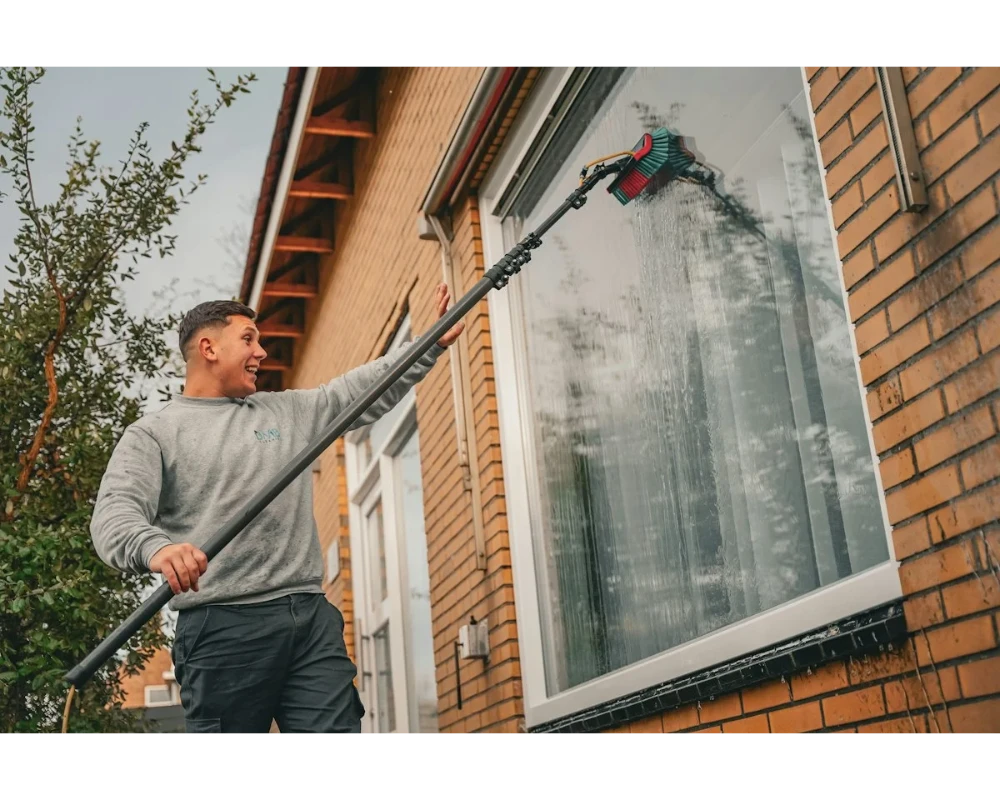 Water-fed pole window cleaning with purified water
| Water | What’s in it | How it’s used on windows |
|---|---|---|
| Tap water | Dissolved minerals such as calcium and magnesium | Mixed with mild soap for squeegee cleaning, then removed |
| Reverse osmosis (RO) water | Most dissolved solids removed | Usually a step before deionization |
| Deionized (DI) water | Remaining minerals removed by resin | Rinsing glass and solar panels; dries spot-free |
| Distilled water | Very low minerals | Small DIY jobs; not practical in volume |
What we use: deionized water for exterior glass, which dries without spots, and soap and a squeegee for interior glass and greasy film. See residential window cleaning for what each visit includes.
What TDS Means for Your Windows
TDS stands for total dissolved solids: everything dissolved in water that stays behind when it evaporates.
 Cleaning double-hung window exterior
TDS is measured in parts per million (ppm), which for water is effectively the same as milligrams per liter. Tap water always has some, mostly minerals like calcium and magnesium plus salts. The US EPA’s secondary standard for TDS in drinking water is 500 mg/L, and it lists deposits and staining among the noticeable effects above that level. For window cleaning, the goal is far lower.
| Reading | What it means for glass |
|---|---|
| 0 ppm | Dries without spots; the target for pure water cleaning |
| Up to 10 ppm | The upper limit given in one equipment maker’s manual |
| Above 10 ppm | Spotting can start; filters need changing |
| Typical tap water | Leaves visible spots when it dries on glass |
A handheld TDS meter checks this in seconds. The operator fills a cup from the brush and reads the number. One equipment maker’s manual tells operators to test daily and says spotting will appear once readings rise above 10 ppm, which is the signal to change the deionization filter.
Sources: US EPA, Secondary Drinking Water Standards; Pure Water Power, RO/DI cart operations manual.
How Pure Water Systems Work
Most systems clean tap water in stages before it reaches the brush.
Sediment filter
Catches rust, sand and larger particles from the supply.
Carbon filter
Removes chlorine, which protects the reverse osmosis membrane.
Reverse osmosis membrane
Pushes water through a fine membrane that removes most dissolved solids. One manufacturer rates this stage at about 98 percent.
Deionization resin
Ion exchange resin removes what’s left, taking the water down to essentially zero TDS.
TDS check at the brush
A meter confirms the water is pure before it touches the glass.
Some systems skip reverse osmosis and use carbon and deionization only. Wikipedia’s article on window cleaning describes both setups: two-stage systems with carbon and deionization filters, and three-stage systems that add a reverse osmosis membrane. Water can also come from tanks of deionized water carried on a vehicle.
How long the resin lasts depends on how hard the incoming water is. The harder the tap water, the faster the deionization resin is used up, which matters in areas with hard water like much of Capitola, Soquel and Aptos.
Sources: Pure Water Power, RO/DI cart operations manual; Wikipedia, Window cleaner.
How a Water-Fed Pole Uses Pure Water
The pole lets the crew clean upper windows from the ground.
| Part | What it does |
|---|---|
| Telescopic pole | Reaches upper floors from the ground; the longest reach several storeys |
| Brush head | Scrubs dirt, salt film and pollen off the glass and frame |
| Water jets | Rinse the loosened dirt away with pure water |
| Hose and filter system | Feeds purified water from the cart or vehicle to the brush |
The brush scrubs, lifts slightly, and the jets rinse the pane and frame from the top down. Because the water has nothing dissolved in it, the glass is left to dry on its own. Wikipedia notes that the target is a TDS reading of zero, and that water above that can leave spots depending on its mineral content.
| Water-fed pole | Ladder and squeegee | |
|---|---|---|
| Upper exterior glass | From the ground | Ladder setup at each window |
| Frames rinsed too | Yes | Wiped by hand |
| Soap residue | None; no soap needed | Must be fully squeegeed off |
| Interior glass | Not used indoors | Yes |
| Heavy mineral stains | Won’t remove bonded minerals | Needs separate treatment |
Sources: Wikipedia, Window cleaner.
Why Tap Water Spots Glass in Santa Cruz County
Hardness depends on which water system serves your home.
 Wiping window with cloth demonstration
| Water system and area | Published hardness | Classification |
|---|---|---|
| City of Santa Cruz (city, most of Live Oak west of 41st Avenue) | Described as moderately hard | Moderately hard |
| Soquel Creek Water District: western Capitola and Soquel | 150 to 370 ppm | Hard to very hard |
| Soquel Creek Water District: Soquel and Aptos | 140 to 300 ppm | Hard to very hard |
| Soquel Creek Water District: La Selva Beach | 100 to 200 ppm | Moderately hard to very hard |
| San Lorenzo Valley Water District, main system (2022 average) | 108 ppm | Moderately hard |
| San Lorenzo Valley Water District, Felton system (2022 average) | 218 ppm | Very hard |
| Hardness (mg/L as calcium carbonate) | Classification |
|---|---|
| 0 to 60 | Soft |
| 61 to 120 | Moderately hard |
| 121 to 180 | Hard |
| Over 180 | Very hard |
Hardness only counts calcium and magnesium, so total dissolved solids in the same water are usually higher. Either way, water like this leaves visible spots when it dries on glass, which is why rinsing windows with a garden hose, or letting sprinklers hit them, makes them look worse.
Sources: City of Santa Cruz Water Department, Water Quality FAQs; Soquel Creek Water District, Water Hardness; San Lorenzo Valley Water District 2022 water quality report; USGS, Water Hardness FAQ.
Pure Water Isn’t a Cure for Everything
It prevents new spots. It doesn’t remove old ones that have bonded to the glass.
| Problem | Does pure water fix it? | What does |
|---|---|---|
| Dust, pollen, salt film | Yes | Brush and rinse |
| Fresh water spots | Usually | Brush and rinse |
| Hard water spots baked on for months | No | Hard water stain removal |
| Greasy film on inside glass | No | Soap and squeegee |
| Paint, silicone, stickers | No | Post-construction cleaning |
| Etched glass | No | Restoration or replacement |
Pure water also works best on glass that is cleaned regularly. Heavily soiled windows may need a traditional wash first, then pure water for maintenance visits after that.
Pure Water for Solar Panels
The same reason pure water works on windows makes it the right choice for solar panels.
Solar panels sit at a low angle in full sun, so any water left on them dries fast. Tap water leaves a mineral film across the glass. Pure water rinses the panels clean without adding anything, and soft brushes avoid scratching the glass or coatings. Always follow the panel maker’s cleaning instructions; some restrict tools, products or water pressure.
See solar panel cleaning for how we clean panels in Santa Cruz County.
Reverse Osmosis vs Deionization
Most pure water systems use both, for different reasons.
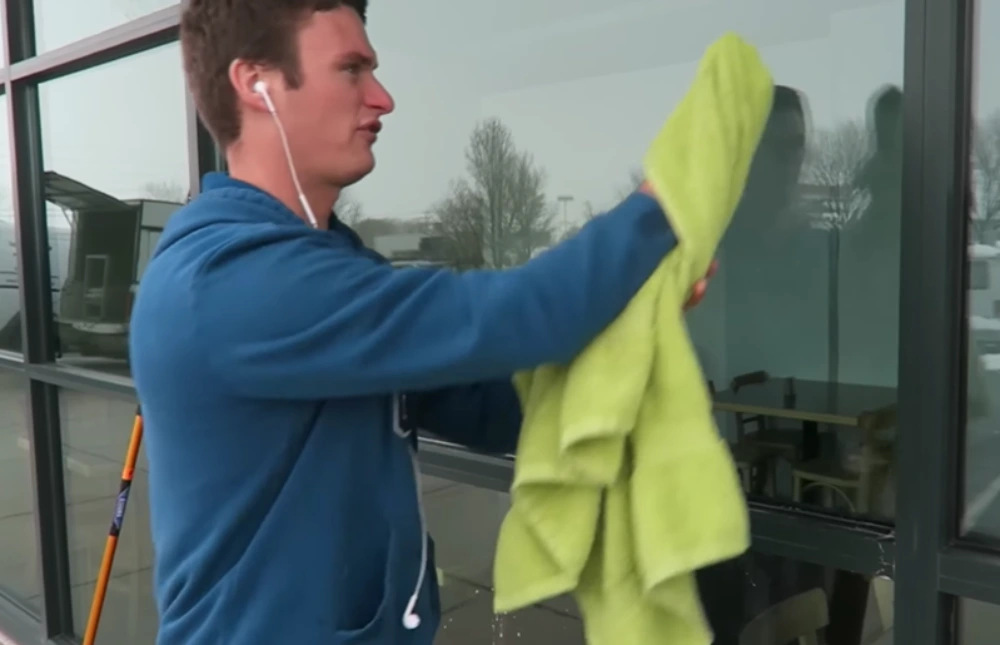 Wiping window frame with towel
| Reverse osmosis (RO) | Deionization (DI) | |
|---|---|---|
| How it works | Forces water through a fine membrane | Ion exchange resin swaps out dissolved minerals |
| How much it removes | Most dissolved solids, about 98 percent in one maker’s rating | Takes water down to essentially zero TDS |
| Running cost | Membrane lasts a long time with good pre-filters | Resin is used up faster with hard water |
| Waste water | Produces some reject water | None |
| Used alone? | Not usually pure enough for spot-free glass | Yes, but resin runs out quickly on hard water |
Running reverse osmosis first takes most of the load off the deionization resin, which is why it’s common where tap water is hard. Deionization then finishes the job so the water at the brush reads zero or close to it.
Pure Water Glossary
The words you’ll hear from a window cleaner who uses pure water.
| Term | What it means |
|---|---|
| TDS | Total dissolved solids, the minerals and salts dissolved in water |
| ppm | Parts per million; for water, about the same as milligrams per liter |
| Hardness | The calcium and magnesium part of what’s dissolved in water |
| RO membrane | The filter in a reverse osmosis system that removes most dissolved solids |
| DI resin | Ion exchange beads that remove the remaining minerals |
| TDS meter | A handheld meter that reads how much is dissolved in the water |
| Water-fed pole | A telescopic pole with a brush and jets fed with pure water |
| Spot-free rinse | A final rinse with pure water that dries without marks |
What Water Should You Use to Clean Windows?
You don’t need a purification system for ground-floor glass.
| Option | Good for | Watch out for |
|---|---|---|
| Tap water with a little mild soap, squeegeed off | Most DIY glass cleaning | Squeegee and dry everything; don’t let it air dry |
| Distilled water for a final wipe | Small panes and mirrors | Doesn’t remove dirt on its own |
| Garden hose rinse | Not recommended for final rinse | Leaves mineral spots as it dries |
| Strong cleaners or acids | Not recommended | Can damage frames, seals and coatings |
For tips on getting the finish right, see how professionals get streak-free results.
Window Cleaning Water: FAQ
What kind of water do professional window cleaners use?
For high exterior glass, many use purified water made with reverse osmosis and deionization filters. For hand cleaning, they use ordinary water with a small amount of mild soap and squeegee it off.
What is deionized water for window cleaning?
Water that has been run through ion exchange resin to remove dissolved minerals. With nothing dissolved in it, it dries on glass without leaving spots.
What does TDS mean?
Total dissolved solids: the minerals and salts dissolved in water, usually measured in parts per million (ppm). It’s what stays behind when water evaporates.
What TDS is needed for spot-free window cleaning?
As close to zero as possible. One pure water equipment maker’s manual says spotting can occur once readings rise above 10 ppm.
Why does tap water leave spots on windows?
Because it has dissolved minerals in it. When the water dries, the minerals stay on the glass as white spots.
Is purified water safe for windows and frames?
Yes. It’s water with the minerals removed. It is used for rinsing glass, frames and solar panels.
Do you need soap with a water-fed pole?
Usually not. The brush loosens the dirt and the pure water rinses it away, so there’s no soap to leave residue.
Can I use distilled water to clean my windows?
Distilled water has very low mineral content, so it can help reduce spots for small jobs. It doesn’t loosen dirt on its own, so glass still needs washing.
How hard is the water in Santa Cruz?
It depends on your supplier. City of Santa Cruz water is described as moderately hard; Soquel Creek Water District lists 100 to 370 ppm depending on area.
What water do you use?
Deionized water for exterior glass, which dries without spots, and soap and a squeegee for interior glass and greasy film.
Does pure water cleaning need a ladder?
Not for most upper exterior glass. A water-fed pole reaches upper floors from the ground. Inside glass is still cleaned by hand.
Get a Free Window Cleaning Quote in Santa Cruz County
Send your address and a few photos. You’ll hear back the same business day with a flat number.
(831) 203-3111- Same-day response, Monday through Saturday
- Flat quote, good for 30 days
- Add gutters, solar or skylights to the same visit
Serving Santa Cruz, Capitola, Aptos, Soquel, Live Oak, Scotts Valley, Felton, Ben Lomond, Bonny Doon, Watsonville and everywhere in between.