
DIY vs. Professional Window Cleaning: When It’s Worth Paying
You can clean most easy, ground-floor windows yourself and get a streak-free result. Hiring makes sense for upper glass that needs a ladder, hard water spots, heavy salt film, homes with a lot of glass, or when you want screens and tracks done too. Here’s how to decide.
Call or text a few photos. Flat quote, usually the same day.
- Short answer
- Decision table
- Tools
- Safety
Do the Easy Glass, Hire Out the Rest
Ground-floor windows you can reach from the ground or a step stool are a reasonable DIY job. Second-story glass, skylights, hard water spots and large view walls are where professional cleaning earns its cost, mostly because of reach, safety and the right water.
 Two-story home with many windows in Santa Cruz
| Situation | DIY | Hire a pro |
|---|---|---|
| Single-story, a few windows | Usually fine | |
| Second-story glass needing a ladder | Recommended | |
| Hard water spots on lower windows | Light spots only | For bonded spots |
| Ocean-facing view glass with salt film | Possible, often | For large panes or regular schedules |
| Skylights | Recommended; roof work | |
| Screens and tracks | Easy to do | Included in most visits |
| Before listing photos | Possible | Often worth it |
Time, Tools and Risk
The comparison isn’t only about money.
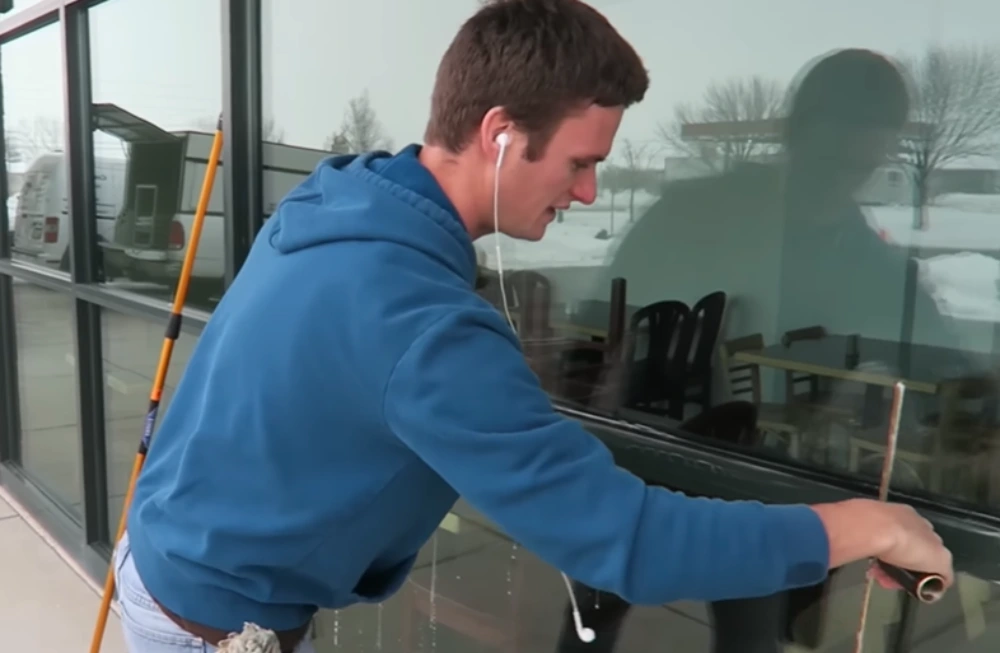 Squeegee bottom edge window cleaning
| Factor | DIY | Professional |
|---|---|---|
| Time | Your weekend; slower on big panes | Usually a few hours for an average home |
| Tools | Squeegee, strip washer, bucket, cloths, step stool | Water-fed pole, purified water, ladders, spot treatment |
| Reach | Ground floor and step stool height | Upper glass from the ground where a pole reaches |
| Hard water spots | Light spots only | Tested and treated |
| Screens and tracks | Yes, if you take the time | Included |
| Risk | Ladder falls on upper glass | Carried by the crew |
We don’t publish prices here; every quote is flat and based on your home. See what affects window cleaning cost.
The Ladder Question
This is the part most people underestimate.
According to NIOSH, more than 500,000 people in the United States are treated for ladder-related injuries each year and about 300 die, based on Consumer Product Safety Commission and CDC data. Upper-story window cleaning often means carrying water and tools up a ladder, leaning to reach the far corner, and setting the ladder on soft garden soil or a slope. That combination is where falls happen.
| If you do use a ladder | Why |
|---|---|
| Set it on firm, level ground | Soft soil and slopes let the feet sink or slide |
| Keep your belt buckle between the rails | Leaning out shifts your weight off the ladder |
| Have someone hold the base | Steadies the ladder and keeps help nearby |
| Don’t carry a full bucket up | Use a small tool belt and a spray bottle |
| Skip it on wet or windy days | Wet rungs and gusts add risk |
Professionals avoid many ladder setups by cleaning upper glass from the ground with a water-fed pole.
Sources: CDC NIOSH Science Blog, It’s National Ladder Safety Month (2017).
How to Clean Windows Like a Pro
The method matters more than the product.
Pick a shaded time
Direct sun dries the glass before you can squeegee it. See cleaning windows in direct sunlight.
Take screens down
Brush and rinse them and let them dry while you clean the glass.
Dust and vacuum tracks
Clear the tracks and sills first so dirt doesn’t run onto clean glass.
Wash the glass
A strip washer or sponge with a few drops of mild dish soap in a bucket of water. Milgard recommends mild dish soap and water for glass.
Squeegee
Pull the squeegee across in one stroke, wiping the blade between strokes.
Detail the edges
A dry, lint-free microfiber cloth for the edges and corners.
Check at an angle
Look at the glass from the side in the light and touch up any streaks.
See how professionals get streak-free results and cleaning windows in direct sunlight.
Sources: Milgard, Window and Door Care Tips.
Common DIY Mistakes
Most streaks and scratches come from a few habits.
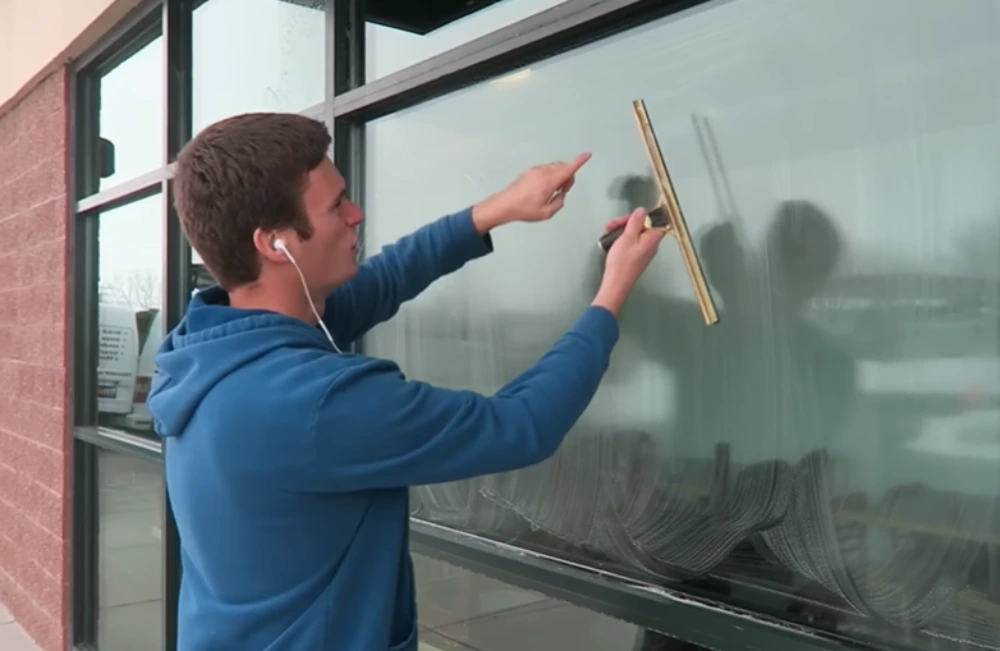 Squeegee angle demonstration window cleaning
| Mistake | What happens | Do this instead |
|---|---|---|
| Too much soap | Residue and haze | A few drops per bucket |
| Cleaning in full sun | Streaks before you can squeegee | Work in shade or on an overcast day |
| Razor blades on unknown glass | Scratches on tempered or coated glass | Check the glass maker’s rules first |
| Pressure washer on windows | Water forced past seals; damaged screens | Hand clean or water-fed pole |
| Letting tap water dry on glass | Mineral spots | Squeegee dry or rinse with pure water |
| Vinegar on frames | Can damage frame finishes | Mild soap only on frames |
The IWCA notes that some tempered glass scratches easily, and glass makers such as Cardinal publish strict cleaning rules for coated glass. Milgard warns that acidic cleaners can damage frame finishes.
Sources: IWCA, Glass Surface Information; Cardinal Glass, IG12 glass cleaning bulletin; Milgard, Window and Door Care Tips.
What You Need for DIY Window Cleaning
A short list, but quality matters.
| Tool | Why | Tip |
|---|---|---|
| Squeegee with a sharp rubber blade | Removes water in clean strokes | Replace the rubber when it nicks |
| Strip washer or sponge | Holds soapy water to scrub | Rinse it often |
| Bucket with mild dish soap | Loosens dirt and salt | A few drops is enough |
| Lint-free microfiber cloths | Dries edges and corners | Keep a dry one just for detailing |
| Soft brush and vacuum | Cleans tracks and screens | Do tracks before glass |
| Step stool, not a ladder | Reaches the top of ground-floor glass | Leave upper floors to a pole |
Skip abrasive pads, steel wool and razor blades unless you know your glass maker allows them.
When DIY Stops Making Sense
A few signs the job has outgrown a weekend.
- You need a ladder to reach the glass
- White spots stay after washing
- The glass still looks hazy after cleaning, which can mean etching
- You have large view walls or many sliders
- Skylights or gutters need roof access
- You’re selling and need the glass ready for photos on a set date
The Parts DIY Often Skips
Clean glass behind dirty screens still looks dull.
 Cleaning divided-lite door glass
Screens hold dust, pollen and salt that wash back onto clean glass with the next fog or rain. Tracks collect sand and grit that make sliders drag, and blocked weep holes stop tracks from draining. Milgard’s care guidance says to keep weep holes clear so water can drain to the outside. If you’re cleaning your own windows, take screens down and rinse them, vacuum the tracks and clear the weep holes before you start on the glass. See window track cleaning.
Sources: Milgard, Window and Door Care Tips.
Why Local Conditions Change the Answer
Salt and hard water make some jobs harder here.
Two local conditions push more homes toward professional cleaning. Coastal fog leaves salt film on ocean-facing glass that comes back within weeks, so view windows need cleaning more often than inland glass. And much of mid-county is on hard groundwater, so sprinkler spots build up on lower windows and bond to the glass if left. Both can be handled yourself early on; both are harder once they’ve built up.
| Local condition | DIY-friendly when | Hire when |
|---|---|---|
| Salt film on ocean-facing glass | It’s light and the glass is reachable | Big view walls or upper glass |
| Sprinkler spots | They’re fresh | They’ve bonded or look etched |
| Tree debris in the mountains | Gutters are low and safe to reach | Gutters or skylights need roof access |
See what causes white film on coastal windows and can hard water stains be removed.
The Hybrid Approach
Many homeowners split the work.
- Clean ground-floor glass yourself between visits
- Hire out upper-story glass and skylights once or twice a year
- Have hard water spots treated once, then keep sprinklers off the glass
- Book gutters and windows on the same visit before the rains
See how often to clean windows and what a professional window cleaning includes.
DIY vs. Professional Window Cleaning: FAQ
Is it worth paying for professional window cleaning?
It’s most worth it for second-story and hard-to-reach glass, hard water spots, homes with a lot of glass, and when you want screens and tracks done too. Single-story homes with a few easy windows are often fine to do yourself.
Can I clean my own windows without streaks?
Yes, with the right tools: a strip washer or sponge, a little mild dish soap in water, a good squeegee with a sharp rubber blade, and a dry microfiber cloth for the edges. Avoid working in direct sun.
Is it safe to clean second-story windows myself?
It carries real risk. NIOSH reports that more than 500,000 people a year in the US are treated for ladder-related injuries and about 300 die. If upper glass needs a ladder, consider whether it’s worth doing yourself.
What do professionals do that I can’t?
Mostly reach, speed and water. Professionals use water-fed poles with purified water to clean upper glass from the ground and have the tools to treat hard water spots. Your results on easy glass can be just as good.
Is there an easier way than a squirt bottle of Windex and paper towels?
Yes. Use a strip washer or sponge with a little mild dish soap in water, then a good squeegee with a sharp rubber blade, and a dry microfiber cloth for the edges. Paper towels and spray tend to leave lint and streaks on large panes. Avoid working in direct sun.
Can I remove hard water spots myself?
Light, fresh spots may come off with careful cleaning. Spots that have bonded for months need treatment, and spots left for years may have etched the glass. Test a small corner first.
How often should I clean my own windows?
Twice a year suits most homes. Coastal homes facing the ocean may need the outside cleaned more often because of salt film.
Should I pressure wash my windows?
No. High pressure can force water past seals and weep systems and damage screens. Clean glass by hand or with a water-fed pole.
What’s the cheapest way to keep windows clean?
Do the easy ground-floor glass yourself on a schedule and hire out only the upper glass, hard water spots or gutters.
Do you clean just the hard-to-reach windows?
Yes. We can clean only the upper or awkward glass and leave the rest for you.
How long does it take to clean windows yourself?
It depends on the number and size of windows and whether you do screens and tracks. Large panes and many small divided panes take longest. Plan a full day for a whole house inside and out.
Should I clean inside or outside first?
Either works, but doing the outside first lets you spot which streaks are on which side when you clean the inside.
Can I use a hose to rinse windows?
Only if you squeegee or dry the glass afterward. Hard tap water left to dry leaves mineral spots.
Is professional window cleaning worth it for renters?
Check your lease first; some landlords handle exterior glass. For a move-out, a professional clean can help the place look its best for the final inspection.
Do professionals use special soap?
Many use a mild soap solution made for window cleaning, similar in strength to a few drops of dish soap. The difference is more in technique, water and tools than in the soap.
Will cleaning windows myself void my window warranty?
Check your warranty terms. Following the maker’s care instructions is the safe approach, and problems usually come from abrasive tools, harsh chemicals, pressure washers or razor blades on glass the maker says not to scrape.
Do magnetic window cleaning tools work?
They can help with light dirt on glass you can’t reach from outside. They don’t clean frames, sills or screens, and they can’t remove bonded hard water spots. Keep the pads clean, since grit trapped under a pad can scratch glass. For upper glass, a water-fed pole from the ground is the other option.
What is the easiest way to clean the outside windows of a house?
For ground-floor glass, wash with mild soapy water and a sponge or strip washer, then squeegee in shade. If you rinse with a hose, squeegee or dry the glass afterward so tap water doesn’t leave spots. For upper glass, professionals use water-fed poles with purified water from the ground, which avoids ladder work.
Get a Free Window Cleaning Quote in Santa Cruz County
Send your address and a few photos. You’ll hear back the same business day with a flat number.
(831) 203-3111- Same-day response, Monday through Saturday
- Flat quote, good for 30 days
- Add gutters, solar or skylights to the same visit
Serving Santa Cruz, Capitola, Aptos, Soquel, Live Oak, Scotts Valley, Felton, Ben Lomond, Bonny Doon, Watsonville and everywhere in between.