
Window Cleaning Glossary
The words you’ll hear when getting a window cleaning quote, explained in plain English. Window parts, glass types, water and minerals, tools and methods, and the coastal conditions that make Santa Cruz County glass dirty. Each term links to the page that covers it in depth.
Call or text a few photos. Flat quote, usually the same day.
- Window parts
- Glass and coatings
- Water and minerals
- Tools and methods
Why the Words Matter
Knowing the terms makes quotes easier to compare.
Two quotes can sound alike and cover very different work. One includes screens, tracks and sills; another prices them as add-ons. One treats hard water spots; another only washes the glass. When you know what a sash, a weep hole or deionized water is, you can ask the right questions and see exactly what you’re paying for.
The terms below are grouped by topic. If a term is about your own windows, the quickest check is to look at the glass and frames while you read. For questions people ask most, see our window cleaning FAQ.
Parts of a Window
What gets cleaned besides the glass.
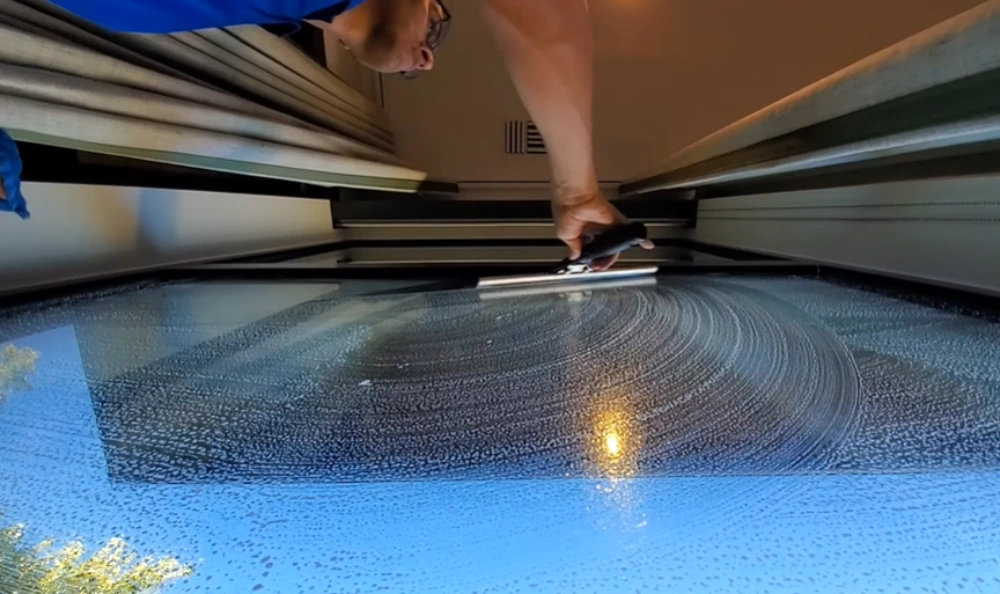 Squeegee interior glass door low angle
| Term | What it means |
|---|---|
| Frame | The fixed outer part of the window that sits in the wall opening. Cleaned and wiped on every residential visit. |
| Sash | The part of the window that holds the glass. On sliding and hung windows it moves; on fixed windows it doesn’t. |
| Sill | The flat ledge at the bottom of the window, inside or out. Collects dust, sand and insects and is wiped as part of the job. |
| Track | The channel a sliding window or door runs in. Sand and grit in the track make sliders drag. See window track cleaning. |
| Weep holes | Small openings at the bottom of the frame that let water in the track drain outside. Blocked weep holes let water back up and leak. |
| Lite (pane) | A single piece of glass. Divided-lite windows have many small panes, which take longer to clean than one large pane. |
| Glazing | The glass in a window, or the putty or seal that holds it in the sash. Old glazing putty can dry and crack and needs a gentle hand. |
| Screen | Mesh in a frame that keeps insects out. Dirty screens drop dust and salt back onto clean glass. See screen repair. |
| Spline | The rubber cord pressed into a groove to hold screen mesh in its frame. New spline is used when a screen is rescreened. |
| Double-pane (insulated glass unit) | Two panes sealed together with a gap between them. If the seal fails, fog or moisture appears between the panes, and cleaning can’t reach it. |
| Hardware | Locks, latches, handles and rollers. Salt air wears them faster; Milgard recommends lubricating hardware at least twice a year in coastal homes. |
Sources: Milgard, Window and Door Care Tips; Bob Vila, Window Weep Holes.
Types of Glass and Coatings
Not all glass can be cleaned the same way.
| Term | What it means |
|---|---|
| Annealed glass | Ordinary float glass that hasn’t been heat-treated. Breaks into sharp pieces. |
| Tempered glass | Heat-treated safety glass, usually marked with a small stamp in a corner. The IWCA notes that some tempered glass scratches easily, so blades are used with care or not at all. |
| Low-E coating | A thin, nearly invisible coating that reflects heat. It may be on an inside surface of a double-pane unit or on an exposed surface. Some coatings can be harmed by certain cleaners, so we check the maker’s instructions. |
| Coated glass | Any glass with a factory coating, such as low-E or self-cleaning types. Glass makers publish cleaning rules for these, and some say metal blades should never be used. |
| Window film (tint) | A film applied to the inside of the glass. It can bubble, peel or cloud with age. Cleaning won’t fix failed film. |
| Acrylic skylight | A plastic dome or panel rather than glass. Cleaned with diluted mild soap and light pressure. Yellowed or crazed acrylic has aged and can’t be cleaned clear. |
| Etched glass (damaged) | Glass whose surface has been chemically attacked, usually by years of mineral spots. It stays cloudy after cleaning and can only be improved, not always restored. See window cleaning vs glass restoration. |
Sources: IWCA, Glass Surface Information; Cardinal Glass, IG12 glass cleaning bulletin.
Water, Minerals and Spots
Why some water dries clear and some leaves marks.
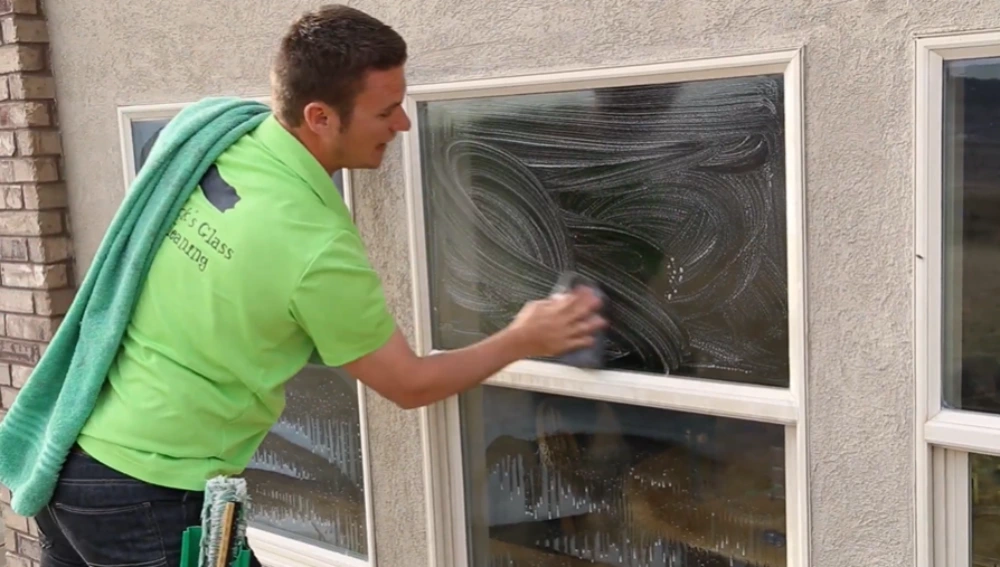 Scrubbing window with cloth
| Term | What it means |
|---|---|
| Hard water | Water with a lot of dissolved calcium and magnesium. When it dries on glass, the minerals stay behind as white spots. |
| Hardness (mg/L or ppm) | How much mineral is dissolved in water, measured as calcium carbonate. The USGS classes 0 to 60 as soft and over 180 as very hard. |
| TDS (total dissolved solids) | Everything dissolved in water, measured with a TDS meter. The lower the number, the less is left behind when water dries. Pure water for window cleaning has very low TDS. |
| Reverse osmosis (RO) | Filtering water through a fine membrane that removes most dissolved solids. Usually a step before deionization. |
| Deionized (DI) water | Water passed through ion exchange resin that removes the remaining minerals. It dries on glass without spots. See what water window cleaners use. |
| Distilled water | Water boiled and condensed, with very low mineral content. Useful for small DIY jobs, not practical in volume. |
| Hard water stains | Mineral deposits bonded to glass, often in a fan pattern on lower windows near sprinklers. They need separate treatment from regular cleaning. See hard water stain removal. |
| Salt film | A thin haze left on ocean-facing glass when fog and sea spray dry. It washes off with soap and water. See protecting windows from salt air. |
| Mineral remover | A product made to dissolve bonded mineral deposits. Kept off frames, seals and stone sills and tested on a corner first. |
| Hardness (mg/L as calcium carbonate) | Classification |
|---|---|
| 0 to 60 | Soft |
| 61 to 120 | Moderately hard |
| 121 to 180 | Hard |
| Over 180 | Very hard |
Sources: USGS, Water Hardness FAQ.
How Windows Get Cleaned
The equipment named in quotes and reviews.
| Term | What it means |
|---|---|
| Squeegee | A rubber blade on a handle that pulls water and dirt off glass in one stroke. The standard tool for streak-free hand cleaning. |
| Strip washer (mop) | A sleeve on a T-bar that holds soapy water and scrubs the glass before the squeegee. |
| Detail towel | A dry, lint-free cloth used on edges and corners after the squeegee. |
| Water-fed pole | A long pole with a soft brush that sprays purified water. Cleans upper glass from the ground, up to about three stories. See water-fed pole vs squeegee. |
| Scraper (razor) | A blade used to lift paint, labels and stubborn debris off glass. Used only on wet glass that allows it, after a test area. |
| Non-scratch pad | A soft scrub pad for lifting deposits without scratching. Steel wool and abrasive pads are never used on glass. |
| Ladder stabilizer | An arm that holds a ladder off the gutter and spreads its weight, so gutters and siding aren’t damaged. |
| Soft wash | Low-pressure cleaning that relies on a cleaning solution. Used on stucco, painted siding, wood and roofs. See soft wash vs pressure wash. |
| Pressure wash | Cleaning with high-pressure water. Suited to concrete, pavers and stone, not windows, screens or shingles. |
| PSI | Pounds per square inch, the measure of water pressure. |
| Surface cleaner | A spinning attachment for pressure washing flat surfaces such as driveways, which cleans evenly without wand stripes. |
For how these come together on a job, see how professional window cleaners get streak-free results.
Sources: Wikipedia, Squeegee.
Santa Cruz County Conditions
The terms you’ll see on our location pages.
| Term | What it means |
|---|---|
| Marine layer | Cool, moist air over the ocean, capped by warmer air above. Fog forms inside it and leaves salt and mineral film on glass as it dries. See why windows get dirty fast near the ocean. |
| June Gloom | The overcast, foggy late spring and early summer weather common along the California coast. |
| Salt spray | Fine ocean droplets carried inland by wind, strongest on cliff-top and beachfront glass. |
| Sprinkler spots | Hard water marks on lower windows where irrigation hits the glass. Turning the heads away stops new ones. |
| Pollen film | A yellow or grey film on glass, screens and solar panels in spring. See our pollen season guide. |
| Redwood duff | Needles and small debris from redwoods that fill gutters and collect around skylights. |
| Wildfire ash | Gritty residue from fires that scratches glass if wiped dry. Rinsed off first with plenty of water. |
Sources: Wikipedia, June Gloom.
Roof, Gutter and Solar Terms
Often booked on the same visit as windows.
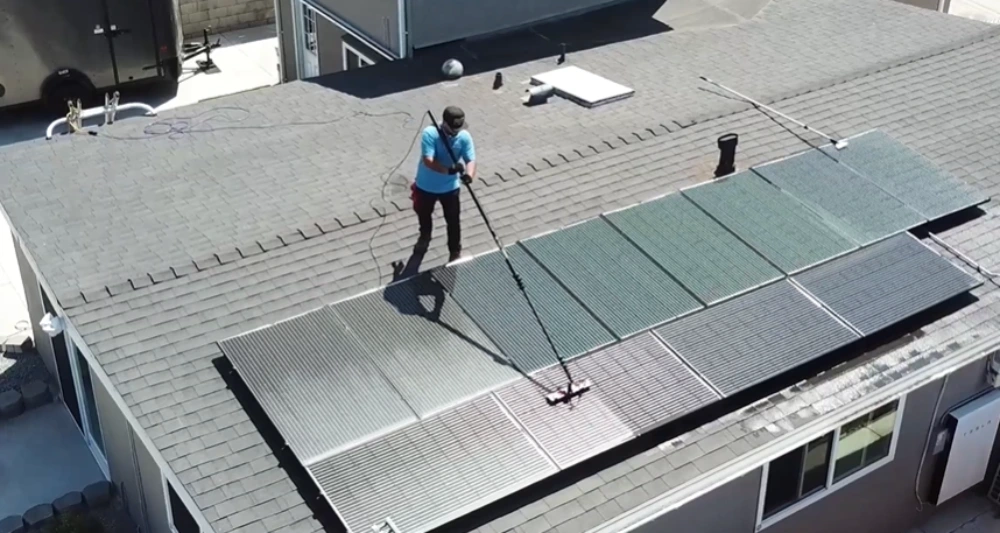 Solar panel cleaning shingle roof pole
| Term | What it means |
|---|---|
| Downspout | The vertical pipe that carries water from the gutter to the ground. Flushed and tested after gutters are cleaned. |
| Gutter guard | A cover or insert that keeps debris out of gutters. Fine micro-mesh blocks more than coarse screens or foam. Guards reduce cleaning but don’t end it. See gutter guards vs gutter cleaning. |
| Defensible space | CAL FIRE’s term for the area around a home kept clear of fuel, which includes removing dead leaves and needles from roofs and gutters. |
| Moss | Green, fuzzy growth on shaded roofs that holds moisture and can lift shingle edges. See moss removal. |
| Algae streaks | Dark streaks running down a roof. Usually algae, not moss, and treated with a soft wash. |
| Soiling | Dust, pollen, salt and droppings on solar panels that block light and reduce output. |
| Monitoring app | The software that shows your solar system’s output. Comparing clear days before and after cleaning shows what cleaning did. |
Sources: CAL FIRE, Ready for Wildfire: Defensible Space; Asphalt Roofing Manufacturers Association, Algae Discoloration.
Words You’ll See in a Quote
What each one means with us.
| Term | What it means |
|---|---|
| Flat quote | One price for an agreed scope, given before work starts. It doesn’t change on site unless you add work. |
| Exterior-only | Outside glass, frames and screens only. You don’t need to be home as long as gates are open. |
| Inside and out | Both sides of the glass, with floors and furniture protected inside. |
| Walk-around | A check of the glass with you before starting, noting etching, failed seals and damaged screens. |
| Route service | Recurring storefront or commercial cleaning on a set schedule, often before opening. |
| Turnover clean | Cleaning a rental between guests or tenants. |
| Post-construction clean | Removing paint, stucco, labels and dust from new or remodeled windows. See post-construction window cleaning. |
| Glass restoration | Treating etched or damaged glass to improve it, as opposed to cleaning, which removes what sits on the surface. |
See what professional window cleaning includes and window cleaning cost in Santa Cruz.
Window Cleaning Terms: FAQ
Why do water drops leave marks on glass that won’t come off easily?
When a drop dries, the water evaporates but the minerals dissolved in it stay behind. Fresh spots usually wash off. Left for months, especially where sprinklers hit the same glass again and again, they bond to the surface and can eventually etch it.
Is that hard water, or old tint coming off?
Check which side it’s on. Hard water spots are usually on the outside of lower windows near sprinklers. Window film or tint is applied to the inside and can bubble or cloud with age. Cleaning won’t fix film that has failed.
How do you clean low-E coated windows?
Find out which side is coated and follow the window maker’s instructions. Some coatings can be harmed by certain cleaners, and abrasive products can mark them. Mild soap, a soft scrubber and a squeegee are the safe default.
Is store-bought distilled water good enough for pure water window cleaning?
Distilled water has very low mineral content, so it can reduce spots on a small job. It isn’t practical in the volume a whole house needs, and it doesn’t loosen dirt on its own, so glass still needs scrubbing.
Is it OK to clean glass with a razor blade?
Sometimes. The IWCA says scrapers won’t scratch uncoated glass when used properly, but some tempered glass scratches easily, and some glass makers say metal blades should never be used on their glass. Check the glass and the maker’s rules first.
Why are there holes at the bottom of window frames?
Those are weep holes. They let water that gets into the track drain to the outside. If they block with dirt or sand, water backs up in the track and can leak inside, so they should be kept clear.
Why is my skylight sweating?
That’s condensation. It forms when warm, moist indoor air meets a cold skylight. Better ventilation helps. It isn’t dirt and cleaning won’t stop it, but a leak at the flashing can look similar, so have a roofer check if water stains spread.
Can stained or dirty asphalt roof shingles be cleaned?
Usually. Dark streaks are mostly algae, which can be treated with a low-pressure soft wash. The Asphalt Roofing Manufacturers Association advises against pressure washing asphalt shingles, because high pressure can damage them.
What causes double-pane windows to fog up between the panes, and is there a solution?
The seal around the glass unit has failed, letting moist air in between the panes. Cleaning can’t reach it. The glass unit needs repair or replacement, so talk to a glass or window company.
Get a Free Window Cleaning Quote in Santa Cruz County
Send your address and a few photos. You’ll hear back the same business day with a flat number.
(831) 203-3111- Same-day response, Monday through Saturday
- Flat quote, good for 30 days
- Add gutters, solar or skylights to the same visit
Serving Santa Cruz, Capitola, Aptos, Soquel, Live Oak, Scotts Valley, Felton, Ben Lomond, Bonny Doon, Watsonville and everywhere in between.