
Solar Panel Cleaning in Santa Cruz, CA
Santa Cruz has some of the highest rooftop solar adoption in California, and some of the dirtiest panels. The same marine layer that hazes your windows sits on your array, and unlike windows, you can’t see it from the ground. We clean panels the way the manufacturers say to: deionized water, soft brushes, no pressure, no soap.
Call or text a few photos. Flat quote, usually the same day.
- Deionized water only
- No pressure washers, ever
- Every panel brand
- Windows + gutters same visit
Does Solar Panel Cleaning Actually Improve Output?
On the coast, yes, and you can prove it yourself. Open your inverter or monitoring app, note the output on a clear day before we come, then check the same hour on the next clear day after. The difference is what the dirt was costing you.
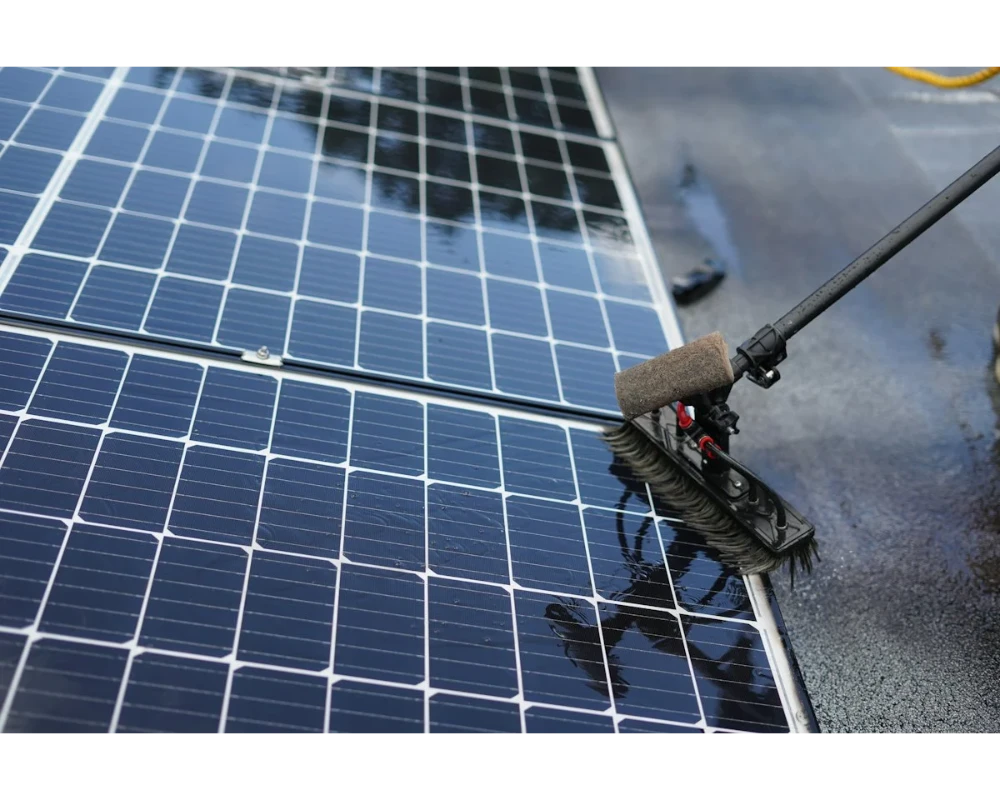 Soft brush and deionized water on a solar array
Why rain doesn’t fix it
Rain wets the dirt and slides it to the bottom edge of the panel, where it dries into a stripe along the frame. That stripe shades the bottom row of cells, and in a series-wired string, a shaded row drags down the whole panel.
Why Santa Cruz is worse than inland
The marine layer carries dissolved salt and minerals. It condenses on cool panels every night and evaporates every morning, leaving a film that rain can’t dissolve. Add spring pollen and eucalyptus sap and you get a coating that only mechanical cleaning removes.
What the research says
Published soiling studies put typical losses anywhere from a few percent in clean, rainy climates to well over twenty percent in dusty, coastal or agricultural areas. Santa Cruz County has coastal salt in the north and field dust in the south, so most local arrays sit toward the higher end.
Is solar panel cleaning worth it in Santa Cruz? If your system hasn’t been cleaned in a year or more and you’re within a few miles of the ocean, almost certainly. A cleaning costs a fraction of what a year of lost output does, and it also lets us spot cracked glass, loose wiring, bird nests and lifted flashing while we’re up there.
How We Clean Solar Panels Safely (and What We Never Do)
Panel manufacturers are specific about cleaning: soft tools, purified water, no pressure, no harsh chemicals, no cleaning hot glass. That’s exactly what we do, and it’s why our cleaning won’t void a warranty.
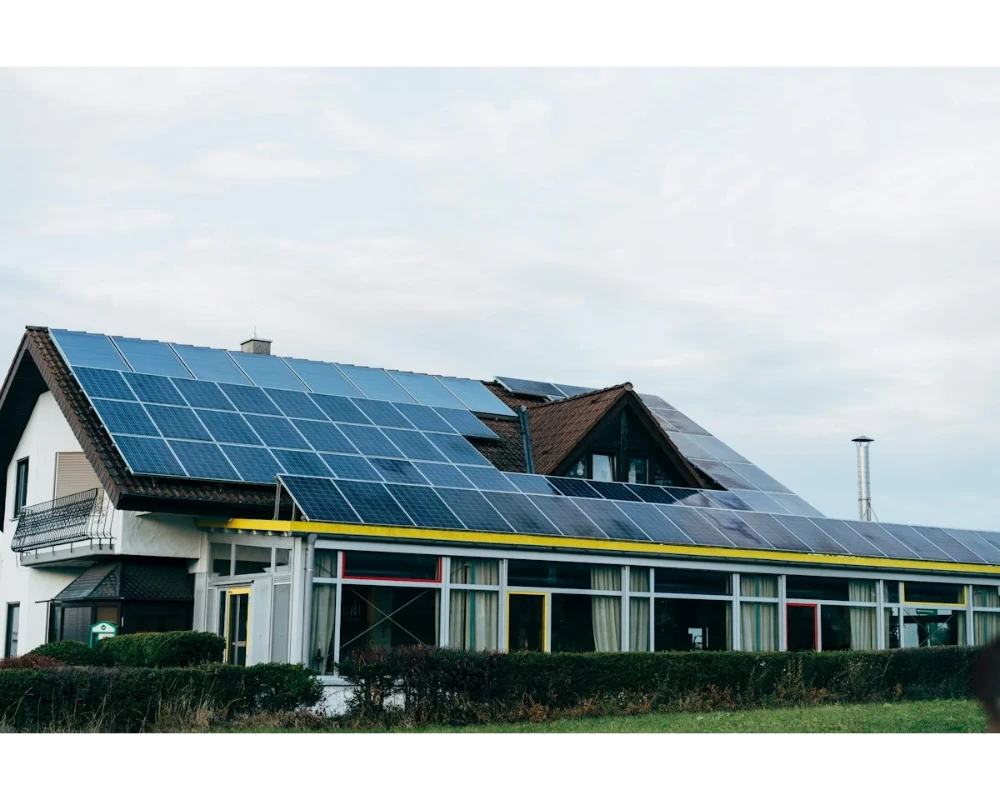 Rooftop solar in Santa Cruz County
Every solar cleaning visit
- Inspection first. We look for cracked glass, lifted frames, loose conduit, nests and damaged flashing before any water goes on. You get photos of anything we find.
- Deionized water only. Tap water in Santa Cruz carries minerals that dry into spots and reduce output. Our water is filtered to near zero total dissolved solids, so it dries clean.
- Soft brush, water-fed pole. A soft-bristle brush on a pole lifts salt film, pollen and dust without scratching the anti-reflective coating.
- Cool panels, early or late. We clean in the morning or on overcast days so cold water never hits hot glass. Thermal shock cracks panels.
- Bird droppings and sap by hand. Stubborn spots get soaked and lifted, never scraped.
- Rinse and let dry. A final pure-water rinse, no squeegee needed. The water evaporates with nothing left behind.
- Output check. If you share your monitoring app, we’ll note before-and-after numbers with you.
What we never do
- Pressure washers on panels
- Soap, detergent, vinegar or glass cleaner
- Abrasive pads, scrapers or razors on the glass
- Walking on panels or leaning ladders on frames
- Cleaning hot panels in midday sun
- Tap water or hose water as the final rinse
- Disconnecting or touching any electrical components
Common Solar Panel Cleaning Mistakes
Solar cleaning is the service where doing it wrong actually costs money. These are the mistakes to avoid.
“A handyman pressure-washed them and now two panels have hairline cracks.”
Never pressure. Never hot glass. Soft brush and deionized water only, and always within the panel maker’s cleaning instructions.
“They hosed them off and the spots got worse.”
Tap water dries into mineral spots. The final rinse has to be deionized or you’ve just moved the dirt around. See why pure water dries spot-free.
“The window guy said he doesn’t do panels.”
We do windows, panels, skylights and gutters in one visit. That’s the whole point.
“Nobody told me there was a bird nest under the array.”
Inspection first, photos of anything we find, and a recommendation on who to call if it’s beyond cleaning.
“Output didn’t change.”
Sometimes the panels weren’t the problem. If a string or inverter is underperforming, we’ll say so and point you to your installer instead of selling you a cleaning.
“They walked on the panels.”
Nobody stands on glass. Poles from the ground, fall protection on the roof, ladders on standoffs, never on frames.
What Solar Panel Cleaning Costs in Santa Cruz
Solar cleaning is priced per panel with a minimum per visit, adjusted for roof access and soiling. Here’s what moves the number.
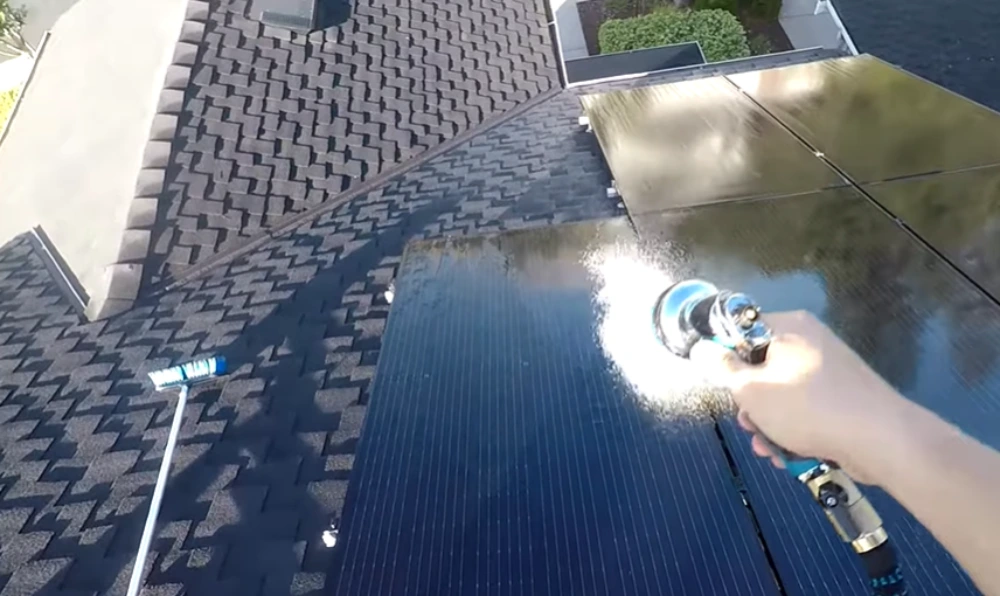 Rinsing solar panels on roof
Panel count
A 12-panel array and a 40-panel array are different jobs. Per-panel pricing drops as the count goes up.
Roof access and pitch
Single-story with ground-pole access is the baseline. Steep tile roofs and three-story access take longer and need more safety gear.
Soiling level
Regular maintenance cleans are quick. Two years of salt, sap and bird droppings is a restoration clean and gets quoted as one.
Bundling
Solar plus windows plus gutters in one visit is the best value we offer. One trip, one crew, one invoice.
Frequency
Twice-a-year customers pay less per visit than one-time cleans.
Reporting
Before/after photos and an output note are included. Commercial reporting is scoped separately.
Quotes are free and flat. Send a photo of the roof from the street or your address and panel count, and you’ll usually have a number the same day. For every pricing factor across all our services, read the Santa Cruz window cleaning cost guide.
How Often Should Solar Panels Be Cleaned in Santa Cruz?
Once or twice a year for most arrays, timed around the two things that coat panels here: pollen season and the marine layer.
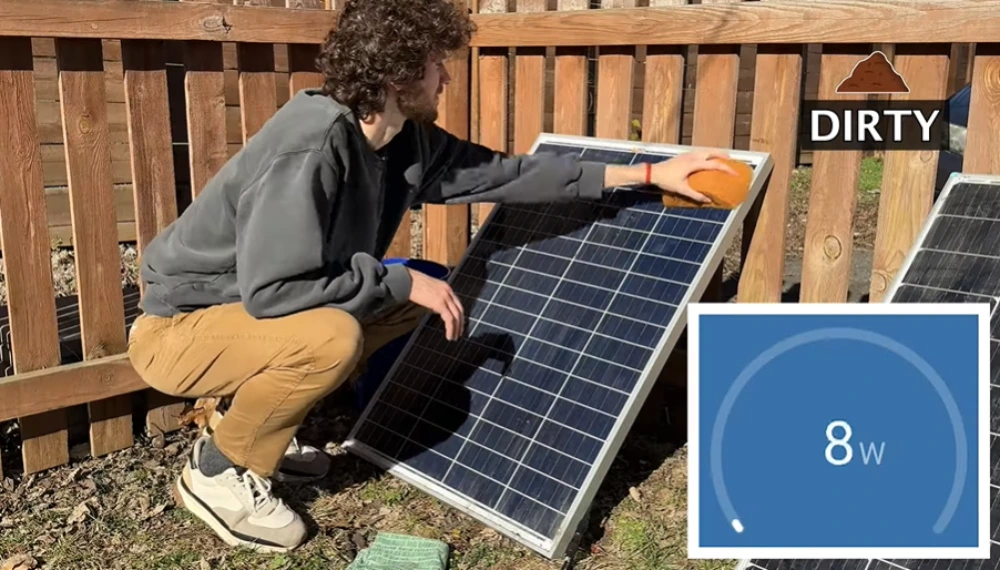 Hand cleaning dirty solar panel
| Where you are | How often | Best timing |
|---|---|---|
| Oceanfront and within a mile of the water | Twice a year | Late spring after pollen, then early fall before storm season. Salt film builds all summer under June Gloom. |
| Mid-county: Capitola, Soquel, Aptos, Scotts Valley | Once or twice a year | May or June after the pollen drop; again in September if output has slipped. |
| San Lorenzo Valley and Bonny Doon | Once a year, plus after fires | Late spring for pollen and sap. Any time after a smoke event. |
| Watsonville and South County ag areas | Twice a year | After spring tilling and after harvest dust settles. |
| Ground-mount and low-tilt arrays | Twice a year | Flat panels don’t self-shed; they hold dust and bird droppings longer than steep roofs. |
| Commercial roofs and carports | Quarterly to twice a year | Scoped by array size and output targets. |
The easy rule: if your monitoring app shows a clear-day output noticeably below what it did the same month last year, and nothing has failed, the panels are dirty. Text us a screenshot and we’ll tell you whether a cleaning is worth it.
What’s Actually Coating Solar Panels in Santa Cruz County
Every neighborhood has its own version. We plan the cleaning around where you live.
 The marine layer leaves the salt film on your panels
Marine salt film
Westside, West Cliff, Pleasure Point, Capitola, Rio Del Mar. Salt is hygroscopic and holds a sticky layer that grabs every bit of airborne dust. It’s a common source of soiling on coastal panels. See whether solar panel cleaning improves output for what the research shows.
Pollen and tree sap
Scotts Valley, Felton, Ben Lomond, Bonny Doon and the Aptos hills. Monterey pine and eucalyptus pollen in spring, redwood tannins and sap year-round. Sap doesn’t rinse. It has to be lifted.
Agricultural and field dust
Watsonville, Freedom, Corralitos and La Selva Beach. Fine dust from tilling and harvest settles in a uniform layer that cuts light evenly across the whole array.
Bird droppings and nests
Gulls on the coast, crows and jays inland. A single dropping can shade a cell hard enough to trip the bypass diode. Nests under the array block ventilation and chew wiring.
Wildfire ash
Fire season in the Santa Cruz Mountains leaves a fine ash that rain turns into a gray paste. After a smoke event, panels need a proper wash, not a hose.
Lichen and moss on the frame edges
Shaded north edges and the gap between panel and roof grow lichen in our damp winters. Left alone it creeps onto the glass and etches it.
Roof-Mount, Ground-Mount, Tile, Metal, Every Panel Brand
We’ve cleaned arrays on composition shingle, clay tile, standing-seam metal, flat commercial roofs and ground-mount racks. SunPower, Tesla, Panasonic, Qcells, REC, LG, Canadian Solar and everything else; the glass and coatings are cleaned the same careful way.
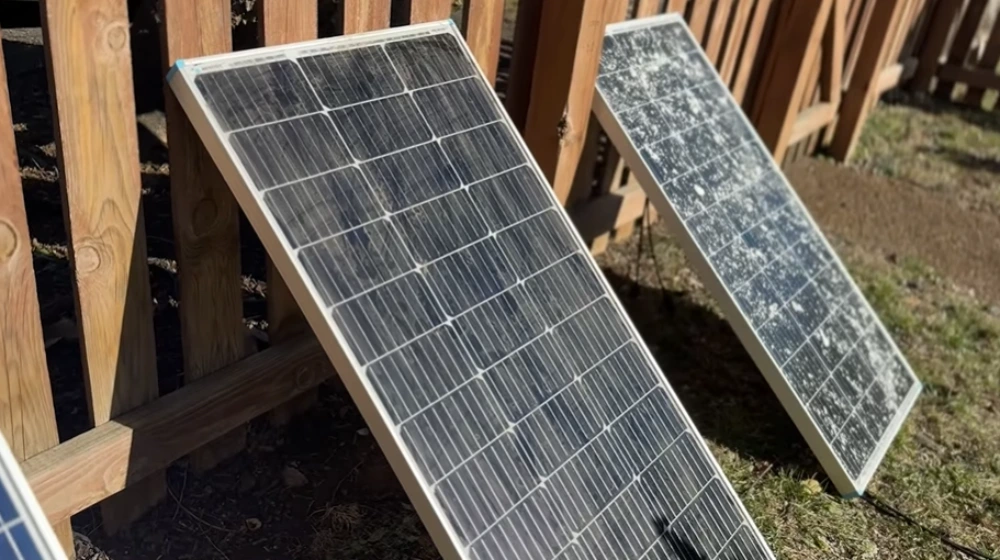 Dirty solar panels side by side
Roof-mounted residential
The most common setup in Santa Cruz. Cleaned from the ground with poles wherever possible, from the roof with fall protection where the pitch and access require it.
Ground-mount and carport arrays
Easy access, worse soiling. Low tilt means dust and droppings sit longer. We recommend twice a year.
Commercial and multi-family roofs
Large arrays scoped by panel count, with photo reporting and an output log for the facility team.
Solar with battery storage
Powerwall, Enphase and other storage systems are never touched. We clean glass and frames only and stay clear of electrical.
Skylights and solar tubes nearby
Already on the roof? We’ll clean the skylights in the same visit. They collect the same film for the same reasons.
Gutters while we’re up there
Most solar customers add a gutter clean in the fall visit. One trip, one invoice, everything above the eaves handled.
Solar Panel Cleaning FAQ
What Santa Cruz solar owners ask before they book.
Is solar panel cleaning worth it?
On the coast, usually yes. Salt film, pollen, dust and bird droppings block light, and rain moves the dirt to the bottom edge rather than removing it. If your panels haven’t been cleaned in a year or more and you’re within a few miles of the ocean, it’s almost certainly worth it. Check your monitoring app before and after.
How much output do dirty panels lose?
Published soiling research reports losses from a few percent in clean, rainy climates to well over twenty percent in dusty, coastal or agricultural areas. Santa Cruz County has coastal salt in the north and field dust in the south, so local arrays tend toward the higher end, especially if they haven’t been cleaned in a year or more.
Will cleaning void my solar warranty?
Not the way we do it. Manufacturers specify soft tools, purified water, no pressure washing, no harsh chemicals and no cleaning of hot panels. That is exactly our method. Check your own warranty terms, and if your installer has specific cleaning guidance, send it to us and we’ll follow it.
Can solar panels be cleaned with water or soap and water? Will it damage the panel?
Water is fine if it’s pure and the panels are cool. We use deionized water and a soft brush, with no soap, detergent, vinegar or glass cleaner. Tap water leaves mineral spots as it dries, and cold water on hot glass can crack panels through thermal shock. Always check your panel maker’s cleaning instructions.
Can I just hose my panels off myself?
You can, but hose water leaves mineral spots and a hose won’t lift salt film, sap or bird droppings. Getting on a roof with a hose is also the most common way homeowners get hurt. If you want to DIY, do it from the ground with a soft brush on a pole and a deionized rinse.
How often should I clean my solar panels in Santa Cruz?
Once or twice a year for most homes. Twice if you’re within a mile of the ocean, in the Watsonville ag belt, or have a low-tilt or ground-mount array. Once a year plus after any wildfire smoke event in the Santa Cruz Mountains.
What time of year is best?
Late spring after the pollen drop, and early fall before storm season. If you only do it once, do it in May or June so you get the clean panels through the long summer days.
Do you clean panels on tile roofs?
Yes. Tile roofs are cleaned from the ground with poles wherever possible, because walking on tile breaks tile. Where roof access is needed, we use fall protection and walk only where the roof is designed to bear weight.
Do you touch the wiring or inverter?
No. We clean glass and frames only. We’ll photograph and flag anything electrical that looks wrong, but the installer or an electrician handles it.
Can you do windows and gutters in the same visit?
Yes, and most solar customers do. One crew, one trip, one invoice for everything above the eaves: panels, skylights, windows and gutters.
Can you pressure wash solar panels?
No. Panel makers specify no pressure, and we never use pressure washers on panels. Cleaning outside the maker’s instructions can affect your warranty. We clean with a soft brush on a water-fed pole and deionized water, and only when panels are cool, in the morning or on overcast days, so cold water never hits hot glass.
Do bird droppings damage solar panels?
They cut output more than most dirt. A single dropping can shade a cell hard enough to trip the bypass diode, and droppings don’t rinse off in the rain. We soak stubborn droppings and lift them by hand, never scraping, then rinse with deionized water. Nests under an array are a separate problem we photograph and flag.
Get a Solar Panel Cleaning Quote
Send a photo of the roof from the street, your panel count, and a screenshot of your monitoring app if you have one. Flat number back the same business day.
(831) 203-3111- Per-panel pricing, flat and up front
- Deionized water and soft brushes only
- Bundle windows and gutters in the same visit
Serving Santa Cruz, Capitola, Aptos, Soquel, Live Oak, Scotts Valley, Felton, Ben Lomond, Bonny Doon, Watsonville and everywhere in between.